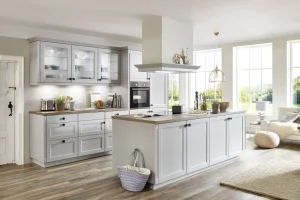

Louvered Door Solid Wood Kitchen Cabinets Turkey
Louvered Door Solid Wood Kitchen Cabinets Turkey: The Complete Engineering, Manufacturing, and Sourcing Guide
The evolution of high-end residential kitchen design has sparked a global resurgence in architectural elements that seamlessly blend classic aesthetic warmth with superior functional performance. At the forefront of this movement is Louvered Door Solid Wood Kitchen Cabinets Turkey, an industrial and artisanal manufacturing sector that has established itself as a premier global benchmark for premium kitchen cabinetry.
Combining Turkey’s deep historical woodworking heritage with state-of-the-art automated manufacturing clusters, Turkish producers have mastered the complex structural engineering required to build stable, beautifully ventilated, and long-lasting solid wood louvered cabinetry. This comprehensive guide provides an exhaustive, engineering-grade analysis of Louvered Door Solid Wood Kitchen Cabinets Turkey. We will explore the material sciences, precise joinery techniques, surface preservation technologies, moisture-control engineering, and supply chain logistics that define this highly specialized sector.
1. The Macroeconomic and Industrial Landscape of Production
The strategic prominence of Louvered Door Solid Wood Kitchen Cabinets Turkey within international supply chains is driven by geographic advantages, rich timber reserves, and aggressive capital investments in advanced woodworking machinery. Rather than operating out of isolated artisan shops, the contemporary Turkish cabinetry sector operates through integrated industrial clusters.
Key Cabinetry Manufacturing Clusters in Turkey
- İnegöl (Bursa): Long recognized as the furniture capital of Turkey, İnegöl combines generational woodworking wisdom with massive Industry 4.0 automated factories. It is a vital hub for sourcing large-scale residential cabinetry developments requiring uniform quality across thousands of units.
- Istanbul Suburbs (Hadımköy & Dudullu): Positioned near major shipping lines, these hubs specialize in luxury, high-end architectural customizations, custom OEM/ODM production, and rapid engineering responses for international hospitality and elite residential projects.
- Ankara (Siteler): A legendary industrial district celebrated for premium solid wood processing, specialized carving, and traditional hand-finished joinery. Siteler remains a primary source for highly intricate, custom-dimensioned louvered doors.
- Kayseri: Dominated by mega-scale production lines, this region focuses on high-volume, standardized modular kitchen components, optimizing cost-efficiencies for global distributors and large real estate developers.
Global Compliance and Sourcing Dynamics
Turkish kitchen cabinet manufacturers design and build products in strict compliance with European Standards (EN), British Standards (BS), and American National Standards Institute (ANSI/KCMA) frameworks. From achieving low-emission indoor air quality metrics to satisfying the rigorous structural loading demands of the Kitchen Cabinet Manufacturers Association (KCMA), the sector’s operational agility allows it to cater flawlessly to the world’s most demanding architectural markets.
2. Anatomy and Structural Engineering of Louvered Cabinet Doors
A louvered door is one of the most mechanically complex assemblies in the cabinetry world. Unlike flat panel or shaker doors, a louvered door consists of dozens of individual slats nested within a structural perimeter frame. Understanding the engineering behind Louvered Door Solid Wood Kitchen Cabinets Turkey requires breaking down this anatomy component by component.
The Component Breakdown
- Stiles (Vertical Frame Members): The vertical outer components of the door that bear the structural weight and host the hardware. In premium Turkish manufacturing, these are engineered to resist the natural twisting forces of solid wood.
- Rails (Horizontal Frame Members): The top and bottom horizontal pieces that interlock with the stiles to create the foundational rectangular structural envelope.
- Louvers (Slats / Blades): The thin, angled wooden slats arranged horizontally within the frame. They can be manufactured as fixed louvers (angled permanently at a specific degree) or operable louvers (movable via a hidden tilt rod, though fixed variants are standard in kitchen cabinetry for durability).
- Central Mullion (Stile/Rail Divider): In oversized pantry or tall utility cabinet doors, an internal vertical or horizontal divider is integrated to cut down the span of the individual slats, preventing bowing over long lifecycles.
Fixed vs. False Louvered Systems
When selecting products within the Louvered Door Solid Wood Kitchen Cabinets Turkey sector, architects and buyers choose between two primary structural methodologies based on the exact application:
True Open Louvered Doors
In this configuration, every individual slat is physically spaced apart from the next, creating a true open airway.
- Engineering Purpose: Allows continuous passive ventilation through the cabinet box. This is crucial for kitchen environments to prevent humidity buildup around appliances, pantries, under-sink storage areas, and integrated waste bins.
- Technical Challenge: Demands absolute precision in mortise-and-tenon or routed dado machining to ensure the wood can expand and contract naturally without fracturing the outer frame.
Closed (False) Louvered Doors
Here, the louvers are machined out of a single solid piece of wood using advanced CNC routing, or they are overlapping slats backed by a solid wood or plywood substrate pane.
- Engineering Purpose: Replicates the distinct, textured aesthetic of louvers while blocking air, light, and dust transmission entirely.
- Technical Benefit: Ideal for standard kitchen dry-goods storage or dish cabinets where total concealment from cooking grease and dust is prioritized over ventilation.
3. Material Science: Selecting Timber for Kitchen Environments
Kitchens are demanding microclimates. Cabinetry must continuously withstand fluctuating temperatures, high relative humidity from cooking steam, localized water splashes, and physical impacts. The success of Louvered Door Solid Wood Kitchen Cabinets Turkey hinges on rigorous timber selection and scientific conditioning.
Preferred Solid Wood Species
Turkish manufacturers utilize both premium indigenous hardwoods and imported sustainably certified timbers to meet varying structural and visual specifications:
1. European Oak (Quercus robur / Quercus petraea)
Sourced extensively from sustainably managed European and domestic forests. Oak is celebrated for its exceptional density, striking open-grain pattern, and innate resistance to mechanical wear. Its natural tannin content provides an extra layer of organic defense against fungal decay and moisture absorption.
2. Walnut (Juglans regia / Anatolian Walnut)
Anatolian Walnut is world-renowned for its rich, deep chocolate-brown hues and intricate swirl grain patterns. Used predominantly in luxury custom kitchen lines, it offers excellent dimensional stability and holds intricate profile cuts exceptionally well without chipping.
3. Beech (Fagus sylvatica)
A highly dense, fine-textured, and uniform hardwood abundant in Turkey’s northern forests. Beech features excellent bending properties and high shock resistance. Because it has a relatively neutral grain structure, it is the premier substrate for high-end solid color lacquered louvered kitchens.
4. Premium Softwoods (Pine and Fir)
Kiln-dried, knot-free vertical grain pine or Siberian larch is utilized for rustic, country-style, or coastal-inspired kitchen cabinetry. Softwoods are highly economical and exhibit excellent workability on CNC lines, though they require meticulous sealing due to their higher porosity.
Kiln Drying and Stabilization Metrics
Raw timber cannot be directly machined into delicate louver slats. Turkish producers apply advanced thermal conditioning:
- Moisture Content Control: Wood is conditioned within automated dehumidification kilns until its internal moisture content reaches a highly stable 6% to 8% for North American exports, or 8% to 10% for European and domestic markets.
- Internal Stress Relief: Slow cooling cycles equalize the cellular structure of the timber. This steps down the wood’s hygroscopic responsiveness, guaranteeing that the narrow louver blades will not warp, cup, or split when exposed to dynamic kitchen microclimates.
4. Advanced Joinery and Precision Manufacturing Methodologies
The high density of components in a louvered door means that manual layout methods are insufficient for mass-customization or high-volume export. The Louvered Door Solid Wood Kitchen Cabinets Turkey industry relies heavily on computerized precision and traditional joinery interfaces engineered for long-term structural integrity.
The Stile and Rail Joint Architecture
The corners of the louvered door frames must withstand the leverage forces of the door leaf over decades of opening and closing cycles. Turkish factories implement two main technical joints:
- Deep Mortise and Tenon Joinery: The rail features a machined projecting tenon that inserts deeply into a matching mortise pocket inside the stile. This maximizes the surface area for glue bonding and provides immense mechanical resistance to sagging.
- Cope and Stick (Profiled Miters): Executed on automated double-end tenoners, the stiles and rails are simultaneously cut with decorative profiles on the inner edges and interlocking structural tongues on the ends, ensuring a perfectly square, seamless geometric alignment.
Automated Louver Slot Mortising
The slots that receive the individual angled louvers must be executed with zero dimensional variance.
- The Technology: Factories deploy specialized multi-spindle CNC louver slotting machines or highly programmed 5-axis CNC machining centers.
- The Precision: The angle of the cut (typically set between 30 to 45 degrees), the depth of the pocket (usually 6mm to 10mm), and the pitch (the spacing between slats) are milled concurrently. This ensures that every single blade floats with uniform tolerances inside its designated channels, allowing for the micro-movements of natural timber without binding.
Assembly and Clamping Kinetics
Once the components are precision-cut, they enter the assembly phase:
- Adhesive Application: High-performance D3 or D4 water-resistant polyvinyl acetate (PVA) glues or industrial polyurethane (PUR) structural adhesives are applied to the joints. D4-rated glues are crucial for kitchen environments, as they are chemically engineered to withstand prolonged exposure to ambient water vapor and localized moisture.
- Pneumatic Clamping: The components are positioned inside hydraulic or pneumatic rotating door clamps. The machinery applies uniform, multidirectional pressure across all four corners simultaneously, squashing any micro-gaps and securing perfect perpendicularity (\(90^{\circ }\) squaring control) before the adhesive cures.
5. Surface Finishes, Polyurethane Lacquering, and Treatment Technologies
Because a louvered door possesses an immense surface area characterized by deep recesses and tight structural crevices, applying an even, protective finish is an incredibly challenging task. The Louvered Door Solid Wood Kitchen Cabinets Turkey sector utilizes advanced finishing workflows to guarantee total envelope protection.
Pre-Finish Calibration and Sanding
Before any liquid coating touches the solid wood, the assembled louvered door must undergo multi-stage sanding:
- Wide-Belt Calibrating Sanders: Flatten the outer frame faces to an absolute uniform thickness.
- Automated Brush-Sanding Machines: Specialized linear sanding machines equipped with flexible, oscillating structural abrasive brushes snake deep between the angled louvers. This rounds off micro-burrs and ensures that the inner faces of the slats are as smooth as the outer frames, preventing future rough spots that could trap kitchen grease and dust.
Finishing Material Options
| Finish Type | Chemical Base | Performance Characteristics | Optimal Aesthetic |
|---|---|---|---|
| Polyurethane Lacquer | Two-component PU with curing catalysts | Exceptional moisture barrier; highly elastic; resists cracking along joint lines due to wood movement. | Solid matte or high-gloss contemporary colors. |
| Acrylic Topcoats | Non-yellowing acrylic aliphatic resins | Extreme UV resistance; prevents light-induced yellowing or fading of natural wood color over decades. | Natural wood veneers and light-colored hardwoods like Maple or Oak. |
| Water-Based Eco-Coatings | Low-VOC waterborne polyurethane-acrylic dispersions | Environmentally friendly; complies with strict EU Green Deal and LEED interior air quality metrics. | Soft matte, open-pore natural finishes. |
| Natural Reactive Oils & Waxes | Plant-based linseed, tung, and carnauba wax blends | Penetrates deep into the wood fibers rather than forming a surface film; allows the timber to breathe naturally. | Rustic, ultra-matte, tactile country-style kitchens. |
The Coating Application Process
Turkish facilities utilize automated finishing systems to ensure flawless coverage:
- Robotic Spraying Reciprocators: The louvered doors travel along a conveyor system into pressurized, positive-pressure spray booths. Robotic arms equipped with multi-axis electrostatic spray guns apply the coatings at precise, calculated angles. The electrostatic charge ensures that the atomized lacquer wrap around the curved edges and deep pockets of the louvers uniformly, preventing unsightly runs, sags, or un-coated “shadow” zones.
- UV (Ultraviolet) Flash Drying: For high-volume production, the lacquers are exposed to high-intensity UV curing lamps, inducing near-instantaneous cross-linking polymerization. This locks in an impenetrable, scratch-resistant surface barrier and readies the cabinet components for immediate structural packing.
6. Cabinet Box (Carcass) Engineering and Hardware Integration
A premium louvered door is only as good as the structural cabinet box (carcass) supporting it. The manufacturers of Louvered Door Solid Wood Kitchen Cabinets Turkey engineer their carcasses to form a rock-solid, balanced foundation capable of carrying heavy stone countertops and enduring heavy daily use.
Carcass Material Compositions
Turkish producers provide several performance tiers for cabinet box construction:
- Solid Wood Layered Core (Blockboard): The premium option, utilizing strips of solid softwood glued together and sandwiched between solid hardwood veneers. It provides ultimate screw-holding strength and will never sag under the weight of heavy cast-iron cookware or marble tops.
- Moisture-Resistant MDF (MR-MDF / Green Board): Engineered wood fibers treated with specialized hydrophobic resins. MR-MDF offers absolute flatness and isotropic stability, making it an excellent option for contemporary modular kitchen carcasses.
- Marine-Grade Plywood: Constructed from alternating cross-laminated layers of hardwood bonded with exterior-grade phenolic glues. This option is widely specified for premium coastal residences or under-sink units where water exposure risks are heightened.
Structural Joinery of the Carcass
Turkish factories utilize computerized processing lines to pre-drill and mill carcasses with high-strength connection joinery:
- Doweling and Confirmat Screws: High-density fluted wooden dowels are injected with glue and combined with heavy-duty Confirmat cabinetry screws, creating an rigid, self-squaring corner joint.
- Cam-Lock Fasteners: For flat-pack (RTA – Ready to Assemble) export orders, precision CNC boring machines drill precise pockets for zinc-alloy cam locks, allowing for strong, simple, and repeatable field assembly without requiring specialized shop tools.
Premium Hardware Ecosystems
To complement the elite nature of solid wood, Turkish kitchen cabinet lines integrate premium, internationally certified moving hardware components from top-tier brands like Blum, Hettich, Grass, and Samet:
[Cabinet Frame] ---> (Concealed 3D Adjustable Hinge) ---> [Solid Wood Louvered Door]
                                    |
                    (Integrated Soft-Close Damper)
- Clip-On Concealed Hinges: 110-degree or 155-degree wide-opening hinges equipped with integrated hydraulic soft-close dampers. These hinges offer 3D macro-adjustability along the \(X, Y,\text{ and } Z\) axes, allowing installers to fine-tune the perimeter door gaps to millimetric perfection on-site.
- Heavy-Duty Undermount Drawer Runners: Full-extension synchronized runners with dynamic load ratings ranging from 40 kg up to 70 kg per drawer, featuring smooth fluid-damping closing mechanisms.
7. Passive Ventilation, Moisture Control, and Hygiene Science
One of the most profound functional advantages of choosing Louvered Door Solid Wood Kitchen Cabinets Turkey is the inherent thermodynamic and hygienic performance that louvered architecture introduces into a modern kitchen environment.
The Physics of Continuous Cabinet Ventilation
Kitchen cabinets enclosed by standard solid flush doors frequently suffer from localized air stagnation. When wet dishes are stored, or when plumbing fixtures leak slightly under a sink, the relative humidity inside a standard cabinet box can rapidly escalate past 80%. This creates an ideal breeding ground for mold, mildew, structural rot, and foul odors.
\(\text{Air\ Flow}\propto \frac{\Delta \text{Temperature}\times \text{Ventilation\ Area}}{\text{Air\ Resistance}}\)
By utilizing true open louvered doors, the cabinet benefits from continuous air exchange. As ambient kitchen air heats up and moves across the room, it establishes micro-convection currents that pass effortlessly through the louver slats. This continuous thermodynamic equalization helps maintain internal cabinet humidity levels close to the room’s ambient levels, protecting stored dry goods from premature spoilage and safeguarding the wood carcass from structural delamination.
Integrated Health and Insect Protection
To balance the need for open ventilation with pristine interior hygiene, premium Turkish kitchen manufacturers integrate advanced design adaptations:
- Rear-Mounted Fine Wire Meshes: For food storage pantries, ultra-fine stainless steel or insect-proof bronze wire mesh screens can be flush-mounted to the interior face of the louvered panel. This permits 100% airflow while serving as an impenetrable physical barrier against common household pests.
- Anti-Microbial Topcoats: Lacquers infused with silver-ion technology can be deployed on the louver surfaces. This active chemical barrier inhibits the cellular division of bacteria and fungi on the high-surface-area slats, ensuring an exceptionally clean and safe environment for food preparation and storage.
8. Environmental Sustainability and Green Building Certifications
As international regulatory landscapes prioritize environmental protection and sustainable sourcing, the Louvered Door Solid Wood Kitchen Cabinets Turkey industrial sector has profoundly reformed its environmental footprint to align with global green building frameworks like LEED, BREEAM, and the European Green Deal.
Chain of Custody (FSC and PEFC)
The top tier of Turkish solid wood cabinetry manufacturers operates under strict FSC (Forest Stewardship Council) and PEFC (Programme for the Endorsement of Forest Certification) protocols. Every log or lumber plank arriving at the factory gate is backed by a verified paper trail documenting that it was harvested from legal, well-managed forests. These forestry operations respect local biodiversity, mandate aggressive replanting ratios, and secure fair working conditions for forestry laborers.
Strict Formaldehyde and VOC Emissions Restrictions
Indoor air safety is a vital parameter in modern residential construction.
- E1 and E0 Conformity: Turkish cabinetry lines utilize composite wood components (like plywood or backing boards) that conform strictly to the E1 European emission standard, with many premium export facilities operating at E0 or NAF (No Added Formaldehyde) levels.
- Waterborne Finishes: By transitioning away from high-solvent nitrocellulose coatings toward advanced waterborne polyurethane-acrylic finishes, Turkish factories have drastically suppressed their Volatile Organic Compound (VOC) emissions. This minimizes the risk of toxic off-gassing inside the end consumer’s home, ensuring a healthier living environment.
9. Strategic Sourcing, Cost Efficiency, and Custom OEM/ODM Advantages
For global procurement managers, boutique kitchen showroom owners, interior designers, and major real estate developers, sourcing Louvered Door Solid Wood Kitchen Cabinets Turkey offers a decisive competitive advantage across multiple operational vectors.
Total Cost of Ownership (TCO) Optimization
Turkey presents a highly compelling value proposition that balances advanced automation with cost-effective operations. The dense clustering of raw material suppliers, domestic hardware manufacturing (such as Samet), and efficient production logistics lower input costs significantly. Consequently, global buyers can secure premium, heavy-duty solid wood cabinetry from Turkish factories at a significantly lower cost compared to Western European alternatives, without sacrificing mechanical tolerances or finish quality.
Agile OEM/ODM Mass-Customization
Unlike ultra-rigid mass-production complexes in East Asia that demand massive, rigid Minimum Order Quantities (MOQs) of identical units, Turkish cabinet manufacturers excel in agile manufacturing. Their production lines are built around flexible CNC workflows that can shift seamlessly between bespoke, made-to-measure high-end residential orders and large-scale, multi-unit multi-family commercial housing specifications. Architects can easily request customized louver profiles, distinct slat pitches, or unusual cabinet dimensions tailored to unique floor plans.
Rapid Global Logistics and Transit Timelines
In the construction and remodeling sectors, prolonged shipping delays can devastate project profitability. Turkey’s geographical positioning acts as a strategic buffer against global supply chain disruptions:
- European Continent: Truck freight from Turkish industrial hubs can reach major Central and Western European destinations within 4 to 7 days, bypassing unpredictable maritime shipping choke points.
- Americas and Middle East: Containerized sea freight via modern Turkish ports (such as Ambarlı, Ambarli-Istanbul, or Izmir) connects directly to major global transit corridors, compressing delivery times to North Africa, the Gulf Cooperation Council (GCC) countries, and the East Coast of the United States.
10. Technical Installation Protocols and Lifelong Maintenance
The structural longevity and operational fluidness of a solid wood louvered kitchen depend entirely on the precision of its field installation and the adherence to correct maintenance regimes post-handover.
Site Readiness Prerequisites
Solid wood kitchen components must never be brought to an active construction site until the building’s interior climate has fully stabilized:
- Wet Trades Completion: All structural plastering, drywall taping, concrete pouring, and floor tiling must be 100% complete and completely dry.
- Climate Stabilization: The building’s HVAC system should be operational for at least 48 to 72 hours prior to cabinetry delivery, maintaining a stable relative humidity range of 40% to 60% and an ambient temperature between 18°C and 24°C. This prevents the wood from undergoing rapid shock expansion or contraction upon unboxing.
Professional Installation Best Practices
- Laser Alignment: Installers must map out the kitchen perimeter using multi-line self-leveling 360-degree laser levels. Base and wall cabinets must be aligned horizontally and vertically along an absolute datum line, regardless of irregularities in the structural floor or wall plaster.
- Secure Wall Anchoring: Cabinet boxes must be mechanically fastened to wall studs or structural masonry using heavy-duty cabinetry screws or specialized adjustable wall hanging brackets (such as Camar or Hettich brackets). These brackets allow for precise post-installation height and depth adjustments.
- Scribe Molding Adaptations: Because walls are rarely perfectly straight, installers utilize matching solid wood scribing moldings or filler panels milled in the same Turkish factory. These are tailored on-site to flush-mount the cabinet boxes tightly against uneven wall profiles, eliminating aesthetic gaps.
- Hinge and Reveal Calibration: The 3D adjustable concealed hinges must be precisely calibrated. Reveal gaps between the louvered door edge and the cabinet frame should be set to a uniform 3mm. This gap ensures a clean shadow line and provides enough clearance for natural seasonal wood movement without causing doors to bind against each other.
Comprehensive Long-Term Care Guidelines
             [Every Six Months]
                     |
  (Inspect & Clean Louver Slat Gaps)
                     |
       (Check Soft-Close Dampers)
                     |
[Apply High-Purity Dry Silicone Spray to Hinges]
- Routine Dust and Grease Removal: Because louvered doors possess multiple horizontal edges, they can accumulate airborne kitchen grease and dust over time. The doors should be dusted weekly using a dry static microfiber duster or a soft brush vacuum attachment. For deeper cleaning, wipe the surfaces down using a damp cloth infused with a mild, pH-neutral wood soap, followed immediately by a dry microfiber towel to eliminate residual moisture.
- Avoid Harsh Chemical Agents: Never clean solid wood cabinets with products containing ammonia, bleach, high-strength solvents, or abrasive scouring pads. These chemicals can strip away or micro-fracture the polyurethane or acrylic topcoats, exposing the raw timber beneath to moisture infiltration and discoloration.
- Hardware Lubrication Cycles: Cabinet hinges and drawer slides should be audited annually. Applying a small drop of high-purity dry silicone spray or clear lithium grease to the moving mechanical pivots will prevent friction wear, neutralize squeaks, and guarantee silent operation.
11. Future Horizons: Industry 4.0, Smart Storage, and Modern Design Aesthetics
The trajectory of Louvered Door Solid Wood Kitchen Cabinets Turkey points toward an increasingly high-tech future where traditional natural beauty converges with cutting-edge residential technology.
Contemporary Aesthetic Evolution
While louvered cabinetry has historically been associated with classic country, Mediterranean, or coastal plantation designs, modern Turkish designers are redefining the style for minimalist urban contexts:
- Micro-Louvers: Slats are engineered to be incredibly thin and packed tightly together (with pitches as small as 8mm to 12mm). This creates an ultra-sleek, highly textured linear screen aesthetic that complements industrial and brutalist interior architecture beautifully.
- Contrast Framing: Combining rich, naturally stained walnut louvered panels inside clean, matte-black powder-coated aluminum or steel architectural outer structural frames, bridging the gap between natural organic warmth and sharp industrial minimalism.
The Integration of Intelligent Cabinetry Ecosystems
Turkish factories are increasingly incorporating smart technologies directly into solid wood kitchen designs during the primary manufacturing phase:
- Integrated LED Channel Routing: CNC machinery cuts precise, recessed channels along the interior backs of the louvered cabinets or behind the face frames. This allows for the flush installation of low-voltage, motion-activated LED strip lighting. The glowing light diffuses gently through the open louver slats, creating an elegant architectural accent light throughout the kitchen at night.
- Servo-Drive Touch Open Systems: Combining solid wood louvered fronts with electromechanical opening mechanisms. A gentle tap on the door face triggers an electric drive unit that opens the cabinet automatically. This eliminates the need for external handles or knobs, preserving clean, uninterrupted louver lines across the entire kitchen layout.
Summary: Securing Competitive Edge via Turkish Craftsmanship
As analyzed throughout this exhaustive industry study, Louvered Door Solid Wood Kitchen Cabinets Turkey represents a premier harmony of structural engineering, material science, and manufacturing agility. By capitalizing on robust industrial clusters, meticulous kiln-drying stabilization, precision CNC-guided joinery, and an unyielding commitment to environmental sustainability, Turkish manufacturers have established themselves as premier partners for the global kitchen cabinetry sector. For international procurement managers, architects, and high-end developers looking to balance exceptional passive ventilation with breathtaking natural aesthetics and optimized total cost of ownership, partnering with Turkey’s solid wood louvered manufacturing sector delivers a decisive, future-proof market advantage.


Şunları da sevebilirsiniz
Lacquered Room Doors Production Turkey
Solid Wood Door Turkey