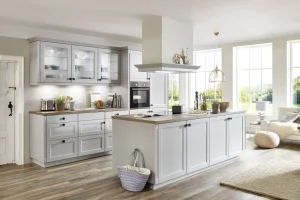

Grey Kitchen Cabinet Turkey
Grey Kitchen Cabinet Turkey: The Definitive Technical Sourcing, Material Science, and Engineering Guide
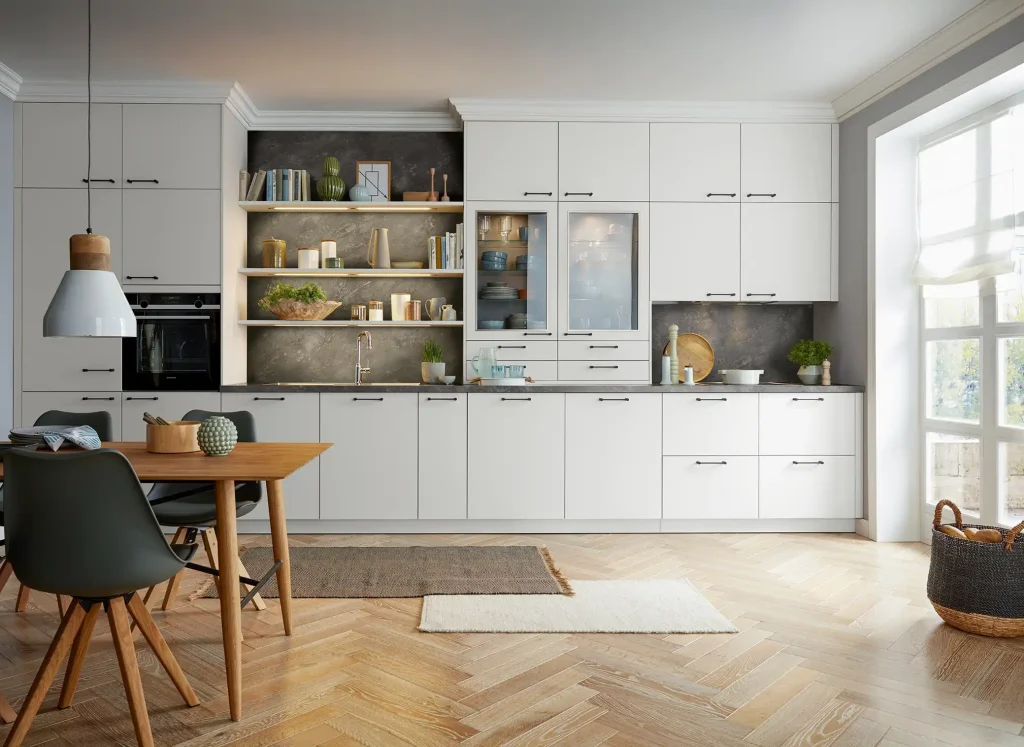
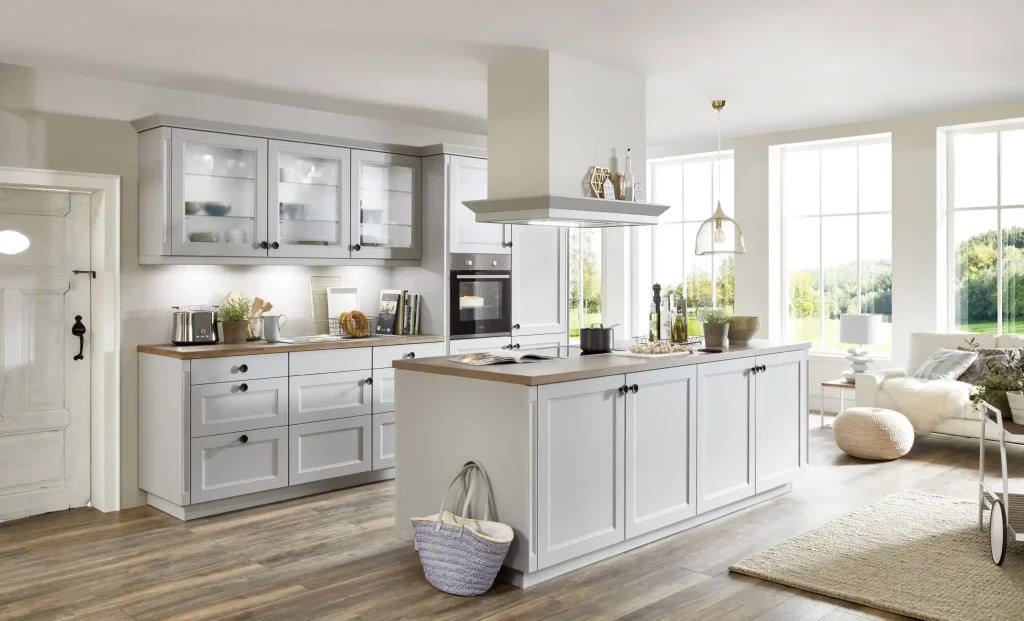
The global architectural arena has established grey as the premier tonal anchor for modern residential and commercial interiors. Moving far beyond transient design trends, grey cabinetry operates as a highly sophisticated mid-tone catalyst. It balances visual mass, conceals everyday micro-particles, and provides a neutral canvas that harmonizes with diverse materials—from industrial poured concrete and architectural stainless steel to rich Anatolian walnut and veined Calacatta marble. Sourcing these specialized modules, however, requires extensive engineering and chemical knowledge. Achieving a flawless, non-fading grey surface that resists grease acids and moisture swelling requires precise calibration of panel physics and surface polymer science.
For international property developers, wholesale B2B procurement managers, and interior architects, sourcing a Grey Kitchen Cabinet Turkey line represents the premier strategy for accessing European-grade furniture manufacturing at highly optimized price-to-performance metrics. Turkey’s unique position as an industrial powerhouse—combining massive capital investments in automated German and Italian CNC networks with advanced local chemical resin and wood-composite extraction plants—enables Turkish manufacturers to deliver precision-machined grey cabinetry that directly challenges elite Italian and German workshops.
This comprehensive technical guide provides an exhaustive, in-depth analysis of the panel engineering, surface coating chemistry, color metamerism controls, mechanical hardware integrations, and commercial procurement strategies defining the Grey Kitchen Cabinet Turkey sector today.
1. Material Science and Core Chemistry of Engineered Substrates
The long-term physical integrity and structural load capacity of any kitchen module depend entirely on the material science of its hidden internal core panels. Because monochromatic grey surfaces expose shadow lines, gap misalignments, and panel warpage far more visually than heavily grained or dark wood-grain finishes, the internal substrate must possess absolute dimensional stability. When evaluating a Grey Kitchen Cabinet Turkey, buyers must analyze the chemical and physical composition of the underlying wood composites.
High-Density MDF (HD-MDF) for Flawless Facades
For front door panels, drawer faces, and decorative routed components, High-Density MDF is the undisputed engineering standard across top-tier Turkish production lines.
- The Fibrillation Protocol: HD-MDF is manufactured by debarking and chipping industrial softwoods and hardwoods (such as sustainably managed pine and beech). These chips are cooked under pressurized steam to soften natural lignins and then torn apart inside industrial disc refiners into ultra-fine cellulose fibers.
- Isotropic Homogeneity: Because the fibers have no specific direction, the resulting panel is completely isotropic. It exhibits uniform physical and mechanical properties throughout its structure. This ensures it will not twist, bend, or expand in response to standard kitchen humidity cycles.
- Calibrated Surface Flatness: The fine fiber structure creates an ultra-smooth face canvas. Turkish mills calibrate these panels using automated wide-belt sanding lines to a thickness tolerance of ±0.1mm. This absolute smoothness is mandatory for grey coatings; even a microscopic surface ripple will distort light reflections and ruin a gloss or matte grey finish.
- Density Benchmarks: Premium Turkish exporters spec HD-MDF with a minimum density profile ranging from 780 kg/m³ to 850 kg/m³, guaranteeing excellent screw-holding capacity along joints and hinges.
Graded Melamine-Faced Chipboard (MFC) for Rigid Carcasses
For the interior structural box (the carcass frame), graded MFC serves as the global baseline for price-to-performance efficiency.
- Three-Layer Structural Orientation: Graded chipboard consists of a dense core layer containing larger interlocking wood flakes that provide flexural bending strength, sandwiched between two outer layers of highly compressed fine wood particles.
- Density Mapping: High-quality Turkish chipboard lines maintain a carcass density of 660 kg/m³ to 720 kg/m³ for 18mm thicknesses. This guarantees that internal cam-locks, assembly dowels, and structural hardware remain permanently secured under the heavy gravitational loads of stone or quartz countertop slabs.
Moisture-Resistant (MR) Panel Performance (EN 312 P3 / EN 622-5)
Kitchen modules are exposed to relentless physical stress from boiling water steam, high humidity, and localized plumbing micro-leaks. Sourcing a Grey Kitchen Cabinet Turkey guarantees access to specialized technical panel classes that meet or exceed stringent global regulatory frameworks.
- The Melamine-Paraffin Formula: During the fiber blending stage, the raw wood cellulose fibers are injected with an advanced Melamine-Urea-Formaldehyde (MUF) resin matrix combined with an elevated concentration of emulsified hydrophobic paraffin waxes. The melamine structures act as a physical shield, blocking ambient water molecules from bonding with the hydrophilic cellulose fibers of the wood.
- Thickness Swelling Limitation Benchmarks: In strict accordance with European Standards EN 312 (P3 Specification) for chipboard and EN 622-5 for MDF used in humid conditions, MR panels must undergo 24-hour water submersion testing. High-performance MR grades exhibit a swelling rate of less than 5% to 7%, whereas standard commercial boards can swell past 15%. This panel type features an integrated green tracking dye embedded uniformly throughout the core resin matrix for complete transparent tracking across Turkish factory floors.
Formaldehyde Emission Controls (E1 and E0 Classes)
Sourcing a Grey Kitchen Cabinet Turkey ensures compliance with strict international indoor air quality guidelines. Synthetic resins can slowly release trace amounts of volatile organic compounds (VOCs) like formaldehyde into the home over time.
- E1 Emission Class Baseline: The legal baseline across the Turkish furniture manufacturing sector. E1-certified panels release ≤0.1 ppm of formaldehyde when evaluated via standard chamber testing (≤0.124 mg/m³), ensuring complete health safety for standard domestic usage.
- E0 and NAF (No Added Formaldehyde) Specifications: For green building projects targeting LEED or BREEAM certifications, major Turkish panel conglomerates (such as Kastamonu Entegre and Yıldız Entegre) supply advanced E0 and NAF panels. These boards utilize bio-based binders or advanced polymeric MDI resins, completely eliminating chemical off-gassing.
2. Coating Chemistry and Surface Finishing Technologies
The exterior finish of a grey cabinet door dictates its tactile richness, gloss or matte consistency, and mechanical defense against surface impacts. Sourcing a Grey Kitchen Cabinet Turkey line unlocks access to cutting-edge surface-lamination and chemical spray technologies designed to maintain pristine optical clarity over decades of active use.
Multi-Layer Polyurethane and Acrylic Lacquer Systems
For fully custom classic Shaker profiles, routed contemporary lines, or seamless handleless J-pull configurations, multi-coat lacquer painting remains a premier choice.
- The Multi-Step Coating Protocol: The routed HD-MDF panel undergoes automated calibration sanding, followed by a pore-sealing isolation layer. Next, two separate layers of high-build polyurethane primer are applied. Each layer is fully cured and precision-sanded back by automated machinery to eliminate micro-imperfections. Finally, two topcoats of premium polyurethane or acrylic matte lacquer are applied using automated reciprocating spray arms in pressurized, dust-free cleanrooms.
- Monolithic Structural Advantage: Lacquer coats the front face, the routed internal grooves, and all four perimeter edges of the panel in a single, seamless paint skin. This monolithic layer eliminates edge joints entirely, preventing moisture from entering the core face.
Co-Extruded High-Gloss and Super-Matte Acrylic Panels
Modern minimalist modular designs favor flat slab doors finished in either vibrant mirror-gloss reflections or velvety, anti-reflective matte textures.
- Acrylic Lamination Mechanics: A thick sheet of PMMA (Polymethyl Methacrylate) or specialty ABS/PMMA co-extruded polymers (typically 0.8mm to 1.0mm thick) is laminated onto a calibrated MDF sheet using an ultra-smooth PUR adhesive bed. The acrylic layer provides depth and color vibrancy while blocking UV rays to prevent fading or shifting under light.
- Electron-Beam Cured (EBC) Super-Matte Finishes: The premium standard in contemporary modular cabinetry. These surfaces undergo an advanced electron-beam radiation curing process that alters the outer polymers, creating a 0% gloss surface that feels soft and resists fingerprints. These advanced surfaces also possess thermal self-healing properties; micro-scratches in the polymer can be ironed out using localized heat, such as a damp microfiber cloth and a household iron.
Membrane (Thermofoil) Vacuum Processing
For high-volume contract projects and budget-conscious transitional renovations, vacuum-pressed thermofoil offers a versatile solution.
- The Process: A 3D-profiled MDF door panel is coated with a heat-activated polyurethane adhesive. A flexible polyvinyl choice (PVC) foil is suspended over the panel inside a specialized press chamber. The machine applies heat and a vacuum to pull the foil down tightly over the face and wrap it seamlessly over the door edges. This eliminates front edge seams entirely, creating an easy-to-clean surface that prevents moisture from entering the front face frame.
3. The Chemistry of Grey: Metamerism Controls and Color Fastness
The primary technical challenge when engineering high-quality grey cabinetry is controlling light interactions. Grey is inherently highly susceptible to two major optical phenomena: metamerism and photo-chemical UV shifting. Sourcing a Grey Kitchen Cabinet Turkey guarantees advanced chemical and optical protection against these aesthetic breakdowns.
Managing Color Metamerism in Grey Pigment Formulations
Metamerism occurs when two colored surfaces appear to match perfectly under one light source (such as factory testing daylight) but show a significant discrepancy under another light source (such as warm residential LEDs or cool fluorescent bulbs). Because grey is a composite color created by mixing varying ratios of black, white, blue, and yellow pigments, it is highly prone to metameric shifts. A cabinet panel that looks like a pure, cool charcoal in the showroom can suddenly cast an unappealing green or purple undertone when installed under warm home lighting.
To eliminate this defect, top-tier factories producing a Grey Kitchen Cabinet Turkey utilize computerized spectrophotometers and closed-loop color-matching software. Pigment batches are evaluated under multiple standard illuminants—specifically D65 (average North Sky daylight), A (incandescent tungsten home lighting), and TL84/F11 (commercial store lighting). The chemical formulations are mathematically adjusted to achieve a low metameric index (FMC2 Δ E < 0.5), ensuring the grey remains stable and color-true across all lighting conditions.
Advanced UV Stabilization and Photo-Chemical Defense
Over time, continuous exposure to natural ultraviolet (UV) radiation can trigger a chemical breakdown in paint or foil polymers, causing grey surfaces to fade or discolor. To ensure total color fastness, Turkish manufacturers implement dual-layer chemical defense:
- Hindered Amine Light Stabilizers (HALS): Advanced chemical additives are blended directly into the polyurethane lacquers and acrylic foils. HALS molecules act as free-radical scavengers; they chemically capture and neutralize the free radicals generated by UV radiation before they can degrade the polymer chain.
- Aliphatic Polyurethane Formulations: Low-grade paints use aromatic polyurethane resins, which contain chemical benzene rings that naturally break down and yellow or shift hue under UV light. Premium Turkish paint cleanrooms exclusively spray aliphatic polyurethanes. These formulations lack benzene structures, making them chemically immune to solar degradation and ensuring the grey finish remains crisp and pristine over decades of sun exposure.
4. Edge Banding Engineering: Polyurethane (PUR) vs. Traditional Adhesives
The perimeter edge of any laminated panel is its primary structural vulnerability. If moisture breaches this joint line, the underlying wood composite will expand, ruin the aesthetic lines, and compromise joint strength. Furthermore, on solid monochromatic grey cabinetry, a sub-par glue line creates a highly visible dark seam or a white glue residue line that destroys the minimalist look. Sourcing a Grey Kitchen Cabinet Turkey requires evaluating the edge-banding glue line chemistry used by the manufacturer.
The Limits of Standard EVA Hot-Melt Glues
Traditional furniture assembly has long relied on EVA (Ethylene Vinyl Acetate) hot-melt glues to apply edge bands.
- The Re-Melting Vulnerability: EVA is a traditional thermoplastic adhesive, meaning it melts when heated and hardens as it cools. However, its chemical composition remains unchanged. If a kitchen cabinet edge is continuously exposed to hot steam from a boiling kettle, toaster, or an unsealed dishwasher, the EVA glue line can soften at temperatures around 70°C to 80°C. Over time, this thermal stress allows moisture to seep behind the edge band, triggering localized board swelling.
- The Aesthetic Glue Line Problem: EVA glue must be applied in a relatively thick layer to ensure adhesion. On monochromatic grey cabinetry, this thick glue line leaves a highly visible seam that catches dirt and compromises the sleek appearance of the front face.
Polyurethane (PUR) Edge Banding: The Steamproof Shield
To guarantee maximum lifespan in humid kitchen climates, advanced plants producing a Grey Kitchen Cabinet Turkey use automated PUR (Polyurethane) Edge Banding lines.
- Irreversible Cross-Linking Chemistry: PUR is a reactive hot-melt adhesive system. When heated and applied, it initiates a chemical cross-linking reaction with atmospheric moisture and the moisture embedded within the wood matrix. Once this curing process completes over 24 to 48 hours, the adhesive transforms permanently into an elastic thermoset solid. It cannot be re-melted or softened by subsequent heat exposure.
- Technical Benchmarks: PUR edge joints are virtually invisible to the eye, completely waterproof, and heatproof up to 140°C – 150°C. This absolute structural seal ensures that steam or splashing water cannot breach the core, effectively preventing delamination over decades of active use.
  Traditional EVA Hot-Melt Setup (Visible Thick Glue Line):
  [Grey Panel Core] ---> (Thick EVA Glue Bed: Vulnerable to Steam / Visible Seam) ---> [PVC Edge]

  Advanced PUR Cross-Linked Seal (Zero-Joint Optical Perfection):
  [Grey Panel Core] ---> (Ultra-Thin PUR Bond: 100% Steamproof / Invisible Seam) ---> [ABS Edge]
ABS vs. PVC Edge Banding Material Selection
Turkish factories allow buyers to specify the chemical formulation of the edge strip material, typically choosing between PVC and ABS:
- Polyvinyl Chloride (PVC): A durable, budget-friendly baseline option that offers high impact resistance and can be color-matched to any melamine surface. However, it is difficult to recycle and releases chlorine gases if incinerated.
- Acrylonitrile Butadiene Styrene (ABS): The premium ecological alternative. ABS is chlorine-free, fully recyclable, and exhibits superior thermal stability. It does not shrink or warp during high-velocity machine trimming, and its elastic nature gives it excellent resistance to impact shocks along cabinet corners.
5. Architectural Geometry, Modular Standardization, and Layout Ergonomics
An effective kitchen design must balance optimized material selections with careful ergonomic spatial planning. The manufacturing ecosystem of a Grey Kitchen Cabinet Turkey relies on strict standardization to ensure perfect component interchangeability and fluid kitchen workflows.
The System 32 Grid Infrastructure
Modern automated cabinet factories operate using the global System 32 manufacturing metric.
- The 32mm Grid Architecture: This manufacturing protocol mandates that all internal structural holes—including hinge mounting plates, drawer runner rails, shelf supports, and cabinet assembly dowels—are drilled in a continuous grid spaced exactly 32 millimeters apart, center-to-center.
- Absolute Component Interchangeability: Structural processing holes are drilled with automated multi-spindle boring heads or CNC routing systems at a uniform 5mm diameter. This grid standardization allows developers to reposition internal drawers, larders, or wire baskets instantly without manual site measurement or drilling. It also ensures the cabinet carcasses remain perfectly square, eliminating gap deviations across extended cabinet runs.
Standardized Sizing Matrices for Volume Sourcing
To maximize shipping container efficiency and simplify space planning for real estate layouts, standard Turkish modular cabinet production adheres to a strict matrix of uniform dimensions.
| Cabinet Module Category | Standard Width Options | Standard Box Depth | Standard Carcass Height |
|---|---|---|---|
| Base Counter Carcasses | 15, 30, 45, 60, 90, 120 cm | 56 cm to 58 cm | 72 cm (Excluding legs) |
| Upper Wall Carcasses | 15, 30, 45, 60, 90, 120 cm | 32 cm to 35 cm | 36, 72, 92 cm |
| Tall Larder / Appliance Towers | 60 cm | 58 cm | 192 cm to 212 cm |
- Base Counter Carcasses: Base units are engineered with a standard structural depth of 56cm to 58cm, providing a clean 2cm to 4cm protective overhang when topped with a standard 60cm quartz or marble countertop slab. The standard carcass height is 72cm, which expands to a finished working height of 85cm to 90cm once heavy-duty adjustable legs and a 3cm countertop are integrated.
- Upper Wall Carcasses: Feature a shallower depth of 32cm to 35cm to prevent users from striking their heads while prepping food at the counter. Standard heights scale from 36cm (for short boxes over refrigerators or extraction fans) up to 92cm (for full-height configurations flush with the ceiling).
6. Functional Internal Hardware and Mechanical Systems
An engineered cabinet shell requires state-of-the-art internal hardware to operate effectively. When specifying a Grey Kitchen Cabinet Turkey program, integration with world-class mechanical hardware transforms static storage units into a fluid, user-friendly workspace. The Turkish cabinetry sector benefits from a robust local hardware supply network led by global manufacturing giant Samet, alongside direct integration with premier European brands like Blum, Hettich, and Hafele.
Hydraulic Soft-Close Hinges and Motion Controls
- Clip-On Assembly Mechanisms: Standard cabinet doors incorporate heavy-duty concealed hinges equipped with integrated oil-filled hydraulic dampening cylinders. These clips allow installers to snap the door onto the cabinet box or remove it completely without tools, accelerating large-scale site installations. Internal adjustment cams allow for quick horizontal, vertical, and depth fine-tuning (±2mm).
- 155-Degree Wide-Angle Hinges: Essential for base modules fitted with internal pull-out drawers or wire larders. Standard hinges block a portion of the internal opening when extended to 90 degrees. A 155-degree wide-angle hinge swings the door completely clear of the carcass face, allowing internal drawer boxes to pull out smoothly without hitting the inner door edge.
Double-Wall Metal Drawer Systems (Tandembox Formats)
Modern modular kitchen layouts replace traditional under-counter shelves with deep full-extension metal drawer banks.
- Dynamic Weight Load Capabilities: These drawer systems feature thin steel side walls that house hidden telescopic runners beneath the drawer base. The drawer back and floor are constructed from 16mm or 18mm melamine panels, creating a rigid structure that resists bowing. They support weight capacities ranging from 30kg up to 70kg for wide pot-and-pan drawers, running smoothly on self-cleaning synthetic roller bearings.
- 3D Face Alignment: Integrated adjustment cams allow installers to align the drawer fronts vertically, horizontally, and diagonally (±2mm) using a standard screwdriver, ensuring clean, uniform gap lines across the kitchen facade.
Overhead Lift Systems for Upper Cabinetry
In compact urban modular kitchens, traditional side-hinged doors on wall cabinets can block walkways or strike users. Turkish designers heavily integrate vertical lift systems:
- Bi-Fold Lift Mechanisms: Lift systems fold a two-panel upper door horizontally, moving it entirely up and out of the user’s way. Driven by heavy-duty mechanical coil springs and hydraulic shock absorbers, the door can be stopped at any position, ensuring shorter users can easily reach the handle to pull it down.
7. Sourcing, Logistics, and Wholesale B2B Procurement Channels
The Turkish modular cabinetry industry operates at immense economic scale, positioning the country as a major alternative to both expensive Western European boutique suppliers and high-volume East Asian factories. For international real estate developers, volume B2B importers, and contract furniture buyers, navigating the production channels for a Grey Kitchen Cabinet Turkey product run offers clear commercial advantages.
Core Cabinet Production Districts
Turkey’s woodworking industry is concentrated in highly efficient industrial clusters backed by complete raw material and hardware supply chains:
- Bursa (İnegöl): The undisputed furniture manufacturing capital of Turkey. İnegöl contains massive industrial parks dedicated entirely to advanced timber processing, panel lamination, and hardware production. Factories here range from specialized custom design studios executing luxury bespoke millwork to massive automated plants specializing in wholesale modular cabinetry.
- Kayseri: The world leader in high-volume automated mass production and flat-pack manufacturing. Kayseri’s mega-factories deploy state-of-the-art automated lines optimized for high-volume modular runs. If a project requires thousands of standardized flat-pack kitchens for a massive residential development, Kayseri offers exceptional manufacturing speed and cost efficiencies.
- Ankara (Siteler): Historically renowned for classic hand-carving and high-end timber craftsmanship. Today, Siteler blends traditional woodworking expertise with modern multi-axis CNC technology, making it the preferred sourcing hub for premium wood-veneer modular installations.
- Istanbul Manufacturing Rings: Factories situated in Istanbul’s outer industrial zones (such as Tuzla, Hadımköy, and Beylikdüzü) specialize in high-end, complex architectural projects. They work directly with international design firms, converting bespoke CAD files into precision-machined modular kitchens.
Flat-Pack (RTA) vs. Factory-Rigid Assembled Delivery Formats
Procurement managers must specify the ideal delivery format based on logistics budgets and local on-site installation labor costs:
- Ready-to-Assemble (RTA / Flat-Pack): Every individual panel is completely finished, edge-banded, and pre-drilled for modular connecting hardware at the factory. The panels are then packed completely flat into multi-layer heavy-duty cardboard boxes with integrated corner guards and protective foam layers. This flat format maximizes container volumes, significantly driving down international ocean-freight and overland transport costs. It is the ideal choice for high-volume distributors, furniture retail chains, and e-commerce brands.
- Rigid Factory Assembled: The cabinet carcasses are fully assembled, glued, and squared using automatic hydraulic press machines directly on the factory line before shipping. While this takes up more container space (increasing shipping costs), it guarantees perfect structural squareness and slashes on-site field installation time and labor costs.
Logistical Pathways and Trade Framework Advantages
- Rapid Lead Times: Sourcing from East Asian routes can require 60 to 90 days for production and maritime shipping. In contrast, Turkish factories typically complete complex custom cabinetry orders within 3 to 4 weeks.
- Geographical Connectivity: Utilizing overland trucking networks, freight shipments from Istanbul or Izmir can reach Central Europe within 3 to 5 days. Major deep-water international ports like Ambarlı (Istanbul), Alsancak (Izmir), and Mersin offer direct, rapid sea lanes to the United Kingdom, North Africa, the Middle East, and the Americas.
- Duty-Free Trade (EU Markets): Thanks to Turkey’s Customs Union agreement with the European Union, manufactured goods move duty-free using an A.TR movement certificate. This simplifies customs clearance and provides an immediate financial advantage over sourcing options outside the EU trade framework.
8. Technical Material Performance Matrix
To guide B2B procurement specifications and architectural contract planning, the table below provides a detailed technical breakdown of the performance characteristics of the primary material configurations utilized for a Grey Kitchen Cabinet Turkey.
| Surface Material Type | Hue / Undertone Stability | Moisture & Steam Barrier | Peak Temperature Resistance | Fingerprint / Smudge Resistance | B2B Cost Index | Primary Targeted Commercial Segments |
|---|---|---|---|---|---|---|
| High-Gloss Acrylic Panel | Superior (Δ E < 0.5 metameric check) | Superior (Excellent when PUR bonded) | 90°C | Low (Reflects prints easily) | Premium | Upscale modern urban apartments, minimalist design developments |
| Super-Matte / EBC Film | Exceptional (Non-fading radiation shield) | Superior | 130°C | Exceptional (Anti-smudge skin) | High-End | Luxury residential developments, high-end design projects |
| Polyurethane Lacquer (Paint) | High-End (Requires Aliphatic resins) | Absolute (Monolithic coverage) | 110°C | Medium-High | Ultra-Premium | Fully custom luxury residences, boutique architectural renovations |
| Membrane Vacuum (PVC Foil) | Balanced (Requires quality stabilizers) | Superior (Zero joints on face) | 85°C | High | Mid-Range | High-volume housing developments, mid-market retail brands |
9. Structural Engineering and Site Installation Protocols
The long-term performance and alignment of a kitchen rely heavily on precision installation. Because a Grey Kitchen Cabinet Turkey program consists of separate modules designed to function as a unified structure, the installation process must follow strict engineering rules to ensure absolute level alignments.
Pre-Installation Structural Wall Assessment
- Substrate Load-Bearing Verification: Upper wall modules can carry immense loads when filled with ceramic dinnerware and heavy small appliances. Installers must carefully evaluate the wall substrate. Solid concrete, brick, or stone walls require high-load nylon or chemical expansion anchors. If mounting onto drywall (gypsum board) partition walls, installers must locate the internal metal or timber studs, or secure a solid horizontal timber tracking rail behind the drywall before hanging modules.
- Laser Alignment and Level Mapping: Using multi-axis self-leveling laser levels, installers map out a true horizontal datum line across the entire kitchen footprint. This is essential because even minor floor slopes can cause countertop slabs to crack or drawer slides to bind if not properly compensated.
Base Module Levelling and Structural Carcass Locking
- Adjustable ABS Plastic Legs: Base modules are placed into position over the laser datum line. Each module is independently leveled by turning its heavy-duty adjustable ABS plastic legs. These legs elevate the wooden cabinet carcass 10cm to 15cm above the floor, completely isolating the wood substrate from moisture during floor mopping or accidental plumbing leaks.
- Male-Female Binding Sleeve Locking: Once leveled, adjacent base cabinets must be clamped tightly together using industrial woodworking bar clamps. Installers then drill through the side walls and lock the boxes together using steel male-female binding sleeves (carcass connectors). This fuses individual boxes into a single structural monolith, distributing heavy stone countertop loads evenly across all legs.
  [Wall Substrate] ---> Continuous Galvanized Hanging Track (Anchored to Studs)
                                       |
                                       v (Secure Connection)
  [Modular Upper Box] <--- 3D Adjustable Internal Hanger Bracket (Tension Adjusted)
                                       |
                                       +---> [Carcass Connecting Sleeve] ---> Adjacent Module
Upper Wall Module Suspension Engineering
- Continuous Galvanized Steel Hanging Rails: Modern modular installations do not rely on individual corner brackets screwed directly into the wall. Instead, a continuous, heavy-gauge galvanized steel suspension rail is securely bolted across the horizontal wall run.
- 3D Adjustable Hanging Brackets: Inside the upper corners of each wall cabinet module, adjustable hooks are mounted to the carcass side walls. These hooks clamp securely onto the steel wall rail. The installer can then adjust internal tension screws to shift the cabinet up, down, forward, or backward by several millimeters, ensuring a perfectly straight, flush line across all cabinet faces.
10. Long-Term Maintenance and Material Longevity Protocols
Preserving the smooth operation, pristine surface finishes, and precise alignment of a premium grey kitchen configuration requires systematic maintenance, particularly in micro-climates exposed to continuous heat, moisture, and cooking oils.
Specialized Cleaning Protocols for High-Gloss and Matte Finishes
- High-Gloss Acrylic and Lacquer Surfaces: Gloss doors should never be wiped with dry microfiber cloths or abrasive paper towels, which can trap micro-dust particles and leave fine swirl scratches. Clean them using a soft, damp chamois leather or a premium clean microfiber cloth with a mild mixture of warm water and neutral, pH-balanced liquid soap. Avoid window cleaners or ammonia-based chemical sprays, as they can break down the outer acrylic protective layer over time.
- Super-Matte Anti-Fingerprint Surfaces: These surfaces can absorb specialized oils from hand creams or cooking sprays over time, creating faint glossy spots. Clean them with a melamine foam sponge (often called a “magic eraser”) dipped in warm water. For stubborn grease buildup, use an isopropyl alcohol solution, wiping gently to avoid burning the surface skin.
Managing Environmental Heat and Moisture Spikes
- Range Hood Operational Discipline: Wood panels absorb moisture rapidly if steam pools in the room for extended periods. Always turn on the extraction hood fan a few minutes before boiling water or cooking to establish a clean airflow path. Ensure the range hood’s extraction capacity matches the room volume to clear steam and airborne oils effectively.
- Dishwasher Steam Deflection: The intense blast of hot steam released when opening a dishwasher can cause adjacent wood face frames to swell over time. Ensure a metallic or heavy plastic steam deflector plate is securely mounted to the underside of the countertop directly above the dishwasher bay. Keep the dishwasher door firmly shut until the internal temperature cools down completely.
Quality Standards and Factory Compliance Certifications
When negotiating B2B import contracts or investing in a Grey Kitchen Cabinet Turkey pipeline, verify that the manufacturing factory holds verified international industrial certifications:
- ISO 9001 & ISO 14001: Confirms that the production facility adheres to strict, internationally audited quality control and eco-conscious environmental management protocols.
- TSE Excellence Certification: Awarded by the Turkish Standards Institution, verifying that the cabinetry complies with all national safety, load-bearing, and durability benchmarks.
- CE Mark Compliance: Essential for seamless customs entry and regulatory approval across all European Union market zones.
- Structural Warranty Terms: Reputable Turkish exporters provide clear warranties ranging from 2 to 5 years. Ensure your contract explicitly covers panel delamination, door warpage beyond standard industrial tolerances (±2mm), and mechanical hardware defects, guaranteeing reliable support for your project.
Conclusion: Sourcing Modern Industrial Excellence from Turkey
The rising international demand for a Grey Kitchen Cabinet Turkey product solution reflects a highly successful union of raw material access, advanced polymer wood chemistry, and state-of-the-art automated manufacturing technologies. By utilizing dense, isotropic core substrates, applying advanced chemical metamerism and UV barriers with steamproof PUR edge-banding, and integrating high-performance soft-close mechanical hardware, Turkish production facilities deliver exceptional structural longevity tailored for modern residential living.
By closely following the material science criteria, site installation checks, and strategic cost optimization paths detailed in this guide, architects, property developers, and buyers can construct inviting, high-density kitchens that serve as timeless statements of structural strength and visual beauty for decades to come.

Şunları da sevebilirsiniz
Lacquered Room Doors Production Turkey
Solid Wood Door Turkey