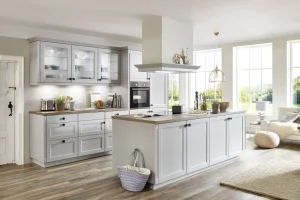

Ready-Made Kitchen Cabinet Turkey
Wooden Kitchen Cabinet Turkey: The Definitive Technical Guide to Material Engineering, Master Joinery, Regional Manufacturing Hubs, and Global Procurement Optimization
The international premium interior architecture, luxury hospitality, and large-scale residential development sectors have experienced an industrial paradigm shift. When institutional procurement managers, real estate developers, and design firms analyze options for high-performance wooden storage systems, the Wooden Kitchen Cabinet Turkey industrial trade corridor represents an elite manufacturing benchmark. Operating at the direct intersection of fully automated European computerized machinery lines, rich regional timber reserves, and centuries-old Mediterranean woodworking traditions, Turkish factories produce premium cabinetry systems capable of outperforming standard alternatives on mechanical longevity, dimensional precision, and cost efficiency.
Unlike standard residential living area furniture, kitchen cabinets must perform within an aggressive indoor microclimate. The substrate core, edge boundary, joinery method, surface finish, and mechanical hardware are constantly subjected to extreme relative humidity spikes, direct liquid splashing, localized boiling steam, high-heat food preparation, oil splatters, and heavy structural loads from thick quartz or natural stone countertops. Choosing the right layout requires looking beyond surface aesthetics. It requires an in-depth analysis of structural timber mechanics, edge-gluing chemistry, mechanical hardware dynamics, and architectural ergonomics. This comprehensive technical guide analyzes the entire engineering lifecycle, material classifications, and structural topologies that define the global market for a premium Wooden Kitchen Cabinet Turkey.
1. Substrate Material Sciences: Core Engineering for Absolute Volumetric Stability
The fundamental failure point of any kitchen vanity or cabinet door is its substrate core. If low-grade, non-rated core boards are used, moisture will inevitably breach the panel, leading to permanent volumetric swelling, structural core weakening, edge-banding blowout, and dangerous fungal mold propagation. Sourcing managers analyzing the Wooden Kitchen Cabinet Turkey market must specify high-performance, water-resistant substrates tailored to humid kitchen zones.
Substrate Performance Hierarchy (Density & Moisture Defiance):
[Standard Particleboard] ---> [High-Density Chipboard] ---> [Standard MDF] ---> [Green-Core MR-MDF] ---> [Multi-Ply Timber Blockboard]
Low Performance <----------------------------------------------------------------------------------------------------> Maximum Structural Longevity
Moisture-Resistant Medium Density Fiberboard (MR-MDF / Green Core)
Standard MDF absorbs airborne water vapor rapidly via capillary action through its soft timber fibers, leading to permanent volumetric swelling, core weakening, and surface warping. Premium Turkish manufacturers eliminate this vulnerability by utilizing specialized green-core MR-MDF.
- Chemical Infusion Matrix: During the mechanical fiber cooking and refining phase, hydrophobic paraffin wax emulsions and moisture-resistant melamine-urea-formaldehyde (MUF) or polymeric diphenylmethane diisocyanate (pMDI) resin networks are blended directly into the wood fiber pulp before pressing.
- Performance Metrics: Under European Standard EN 317, green-core MR-MDF must undergo 24-hour total water submersion tests. High-grade Turkish boards exhibit a thickness swelling rate of less than 5% to 8%, compared to standard cabinetry boards which routinely exceed 15% deformation.
- Internal Bond Strength: Offers an internal bond strength exceeding 0.75 N/mm² under EN 319 testing, ensuring that heavy wall-mounted cabinet hanging brackets remain permanently anchored without pulling out of the wood fibers under full weight loads.
High-Density Three-Layer Particleboard (Chipboard)
Widely utilized for interior cabinet carcasses and standard flat-panel modular lines, high-density particleboard provides an optimal balance of structural stiffness and cost efficiency.
- Structural Mechanics: Turkish mills engineer a three-layer core profile where a dense center of coarse wood chips is sandwiched between two outer skin layers of ultra-fine, highly compressed wood particles.
- Edge Milling Cleanliness: This micro-particle outer surface ensures clean, blowout-free cuts when processed by high-speed computer-controlled sizing saws, which is critical for achieving a flawless edge-band glue line.
Cross-Laminated Solid Timber Blockboard Panels
Reserved exclusively for luxury bespoke configurations and structural end-panels in high-end natural wood kitchens.
- Engineering Framework: Short blocks of lightweight pine or spruce are edge-glued to form a solid core. Hardwood veneers are then hot-pressed onto both faces with their grain running exactly perpendicular (90 degrees) to the core’s grain direction.
- Dimensional Advantage: This cross-laminated structure ensures that the directional expansion and contraction forces of adjacent wood layers cancel each other out. The panel remains perfectly flat even when exposed to fluctuating kitchen climates.
2. Botanical Timber Selection: Sourcing Regional Hardwoods and Architectural Veneers
Selecting the correct wood species dictates not only the aesthetic profile of a Wooden Kitchen Cabinet Turkey system but also its surface hardness, indentation resistance, stain absorption parameters, and price point. Turkish master joiners categorize timbers based on their Janka hardness ratings, volumetric shrinkage percentages, and cell pore distribution patterns.
Native and Regional Hardwoods
European White Oak (Quercus robur)
Widely harvested from managed, sustainable reserves across the Marmara and Western Black Sea regions of Turkey, European White Oak is a cornerstone material for premium cabinetry.
- Janka Hardness Rating: 1,360 lbf (Pounds-force).
- Cellular Structure: Ring-porous hardwood with thick-walled fibers and prominent medullary rays.
- Volumetric Shrinkage: 15.8% from green to oven-dry.
- Technical Advantage: Rich in natural tyloses, which are microscopic balloon-like outgrowths that plug the vascular vessels of the wood. This structure makes the timber highly resistant to liquid penetration, making it an excellent choice for trash pull-outs and under-sink zones.
Turkish Walnut (Juglans regia)
Sourced primarily from the high-altitude, mountainous terrains of Central and Eastern Anatolia, Turkish Walnut veneer and solid timber are world-renowned for their dense grain structure and distinct coloring.
- Janka Hardness Rating: Approximately 1,220 lbf.
- Cellular Structure: Semi-ring-porous to diffuse-porous, featuring an incredibly tight, smooth grain envelope.
- Volumetric Shrinkage: 12.8% (Highly dimensionally stable once fully seasoned).
- Technical Advantage: Features low overall shrinkage and expansion rates, rendering it highly resistant to warping or opening at joint intersections under kitchen humidity shifts. Its coloration ranges from golden honey to deep, rich espresso with dark structural growth lines.
Anatolian Chestnut (Castanea sativa)
Grown natively in the damp, rainy forests of the Coastal Black Sea region, Anatolian Chestnut is a traditional powerhouse choice for rustic, transitional, and coastal installations.
- Janka Hardness Rating: 680 lbf.
- Cellular Structure: Highly ring-porous with a prominent, expressive grain structure that strongly resembles oak but lacks visible medullary rays.
- Volumetric Shrinkage: 11.6% (Exceptionally low).
- Technical Advantage: Contains a high concentration of natural tannic acid. This provides the wood with inherent biological immunity to rot, wood-boring insects, and mold cultivation, even when exposed to high-moisture conditions.
Reconstituted and Engineered Alpi Veneers
For high-volume commercial contracts and minimalist design schemes requiring identical color consistency across hundreds of doors, Turkish manufacturers utilize engineered wood coverings.
- The Process: Fast-growing sustainable plantation timbers (such as poplar or ayous) are sliced into thin sheets, dyed in specialized chemical vats, and restacked in engineered molds under immense pressure to form a solid log. This engineered block is then sliced again to create the final face veneer sheet.
- Technical Advantage: Complete freedom from natural defects like knots or mineral streaks, absolute consistency of grain and color from sheet to sheet, and zero risk of batch variations when expanding a kitchen layout in the future.
3. Industrial Wood Seasoning: Computerized Kiln-Drying and Moisture Management
A Wooden Kitchen Cabinet Turkey product will fail prematurely if the raw lumber is machined before its moisture content is stabilized. Wood is a hygroscopic material; it constantly exchanges moisture with its surrounding environment to maintain a balance with ambient relative humidity.
The Dynamics of Free and Bound Water Evacuation
Raw lumber right after harvest contains two distinct forms of water:
- Free Water: Water held by capillary forces within the open cell cavities (lumens).
- Bound Water: Water chemically bound within the cellular walls of the wood tissue.
As lumber dries, free water evaporates first. The state where all free water is completely evacuated but the cell walls remain fully saturated is known as the Fiber Saturation Point (FSP), occurring at roughly 30% moisture content. Any moisture loss below this point forces bound water out of the cell walls, causing the wood fibers to shrink and creating internal mechanical stresses.
Wood Dehydration Architecture:
[Green Lumber: 50%++ MC] ---> Evacuation of Free Water ---> [Fiber Saturation Point: ~30% MC] ---> Evacuation of Bound Water ---> [Target Export Equilibrium: 6% - 8% MC]
Computerized Steam and Vacuum Kiln Schedules
Premium Turkish manufacturing hubs utilize automated, computerized conventional steam kilns or high-speed vacuum drying kilns following strict, species-specific drying protocols:
- Pre-Conditioning Phase: The lumber is heated using saturated steam under high relative humidity. This step thoroughly warms the core of the heavy timber slabs without letting the outer surfaces dry too quickly, preventing surface checking.
- Drying Phase: Computerized sensors measure the wood’s internal electrical resistance to check moisture content in real time. The kiln environment systematically adjusts heat and relative humidity to draw moisture out from the core to the surface at a safe, uniform speed.
- Conditioning and Stress-Relief Phase: At the end of the drying cycle, steam is reintroduced to relieve any residual drying stresses locked across the wood cells, preventing wood bowing during CNC routing.
- The Export Mandate Target: For kitchens destined for Western Europe, North America, or the GCC region, Turkish factories dry the wood to a precise 6% to 8% Moisture Content (MC). This target perfectly matches the air-conditioned indoor environments of modern homes, ensuring the wood will not crack or pull apart at the seams after installation.
4. Advanced Splicing and Veneer Matching Engineering
The artistry and technical mastery of Wooden Kitchen Cabinet Turkey manufacturers are most evident during the veneer matching phase. Because veneer sheets are sliced sequentially from a single log (known as a flitch), they must be joined edge-to-edge to create wide panels for cabinet doors.
Veneer Matching Orientations across Panel Faces:

Book Matching:

|===\ /===||===\ /===||===\ /===| (Alternating sheets flipped like pages of a book)

Slip Matching:

|===/ ===/ ||===/ ===/ ||===/ ===/ | (Sequential sheets slid sideways, maintaining grain slant)

Random Matching:

|==/ =\==/ ||=\==\ ==/ ||==/ \==\ | (Deliberately mixed sheets mimicking random solid boards)
Book Matching
This is the standard matching methodology used across high-quality Turkish cabinet lines. Every second sheet of veneer is flipped over like the page of a book.
- Result: The grain pattern of sheet A mirrors the grain pattern of sheet B across the joint line. This creates a highly symmetrical, geometric layout that showcases the natural symmetry of the tree’s internal structure.
- Technical Note: Because alternating sheets show the reverse side of the veneer cut, they absorb stains slightly differently. This can create a subtle light-and-dark striped visual effect known as “tight and loose side shading,” which confirms the use of authentic natural wood.
Slip Matching
Veneer sheets are placed sequentially without flipping them. They are simply slid sideways across the panel face.
- Result: The grain direction remains uniform across all joints. This layout is highly recommended for quarter-sawn and rift-cut linear veneers, as it yields a clean, repeating pattern across the entire kitchen array without mirror lines.
Blueprint/Sequence Matching
For luxury architectural installations, premium Turkish engineers execute full-scale blueprint matching.
- The Process: Instead of matching individual doors independently, the factory engineers match the veneer sheets across the entire face of the kitchen layout. Sheets flow continuously from cabinet to cabinet, across drawer faces, and into upper panels.
- Result: The natural grain of the wood travels across the entire length of the kitchen without being broken by cabinet seams, turning the cabinetry into a singular piece of architectural art.
Industrial Edge Jointing Systems
To fuse individual veneer strips into a single panel, Turkish factories employ computerized longitudinal veneer splicing lines (such as Kuper or Fisher & Rückle systems):
- Glue Thread Splicing: A specialized zig-zag fiberglass thread coated with thermo-plastic glue is applied across the joints under heat, pulling the edges tightly together. This thread is sanded away during the final calibration phase.
- Edge-Gluing: A high-speed system that applies a thin line of urea-formaldehyde or polyurethane glue directly to the square-cut edges of the veneer sheets before pressing them flat. This creates a completely flush, invisible joint line with zero gaps or glue bleed-through.
5. Master Joinery and Structural Frameworks of Cabinet Construction
The structural joinery techniques applied across a Wooden Kitchen Cabinet Turkey production line determine whether the cabinetry will maintain its alignment over decades of daily use. Turkish engineering blends classic, mechanically locking joints with advanced, cross-linking structural adhesives.
Mortise and Tenon vs. Double-Dowel Stiles and Rails
For classic five-piece Shaker doors and raised-panel cabinet profiles, the connection between the vertical stiles and horizontal rails bears significant dynamic load:
Frame Joinery Mechanics:

Traditional Mortise & Tenon:
   +-----------------------+

   |       Rail            |============> [Solid Tenon Projection]
   +-----------------------+                    ||
                                                \/
                                        +---------------+

                                        |     Stile     | (Precision Mortise Pocket Slot)
                                        +---------------+

Advanced Double-Dowel Configuration:
   +-----------------------+

   |       Rail            | (CNC Milled Inward Dowel Sockets)
   +-----------------------+    [Dowel]   [Dowel]
                                [=====]   [=====]
                                   ||        ||
                                   \/        \/
   +----------------------------------------------------+

   |                       Stile                        | (Bored Alignment Matrices)
   +----------------------------------------------------+
- Traditional Mortise and Tenon: The tenon (protruding tongue) of the rail fits snugly into the mortise (slot) of the stile. This configuration offers an expansive gluing surface for high-performance polyvinyl acetate (PVA) structural adhesives, easily supporting heavy raised timber center panels.
- Double-Dowel Joinery: Widely used in automated Turkish production lines. Multi-spindle drilling machines cut exact parallel sockets into matching parts. Fluted solid beech dowels are injected with adhesive and pressed together using pneumatic clamps. The flutes provide escape paths for excess glue while creating expanding ridges that lock permanently into the end-grain fibers.
Carcass Engineering: Dovetails, Blind Dadoes, and Confirmat Systems
While lower-grade kitchen manufacturers utilize chipboard or low-density MDF for hidden cabinet bodies, a luxury Wooden Kitchen Cabinet Turkey project specifies carcasses built from solid finger-jointed timber panels or calibrated plywood cores:
- English Half-Blind Dovetails: Reserved for premium drawer box construction. The interlocking pins and tails create a mechanical bond that handles decades of outward pulling forces without pulling away from the drawer front.
- Blind Dado and Groove Construction: Interior partition decks and bottom panels are set into routed channels (dadoes) cut halfway through the vertical side panels. This channels the weight of heavy granite, marble, or solid wood countertops directly down through the structural cabinet walls to the floor leveling legs.
- Steel Confirmat Fasteners: For modular contract assembly, large-diameter steel Confirmat screws are driven into pre-bored dual-diameter holes. These specialized fasteners function like steel dowels, providing exceptional shear strength and allowing the cabinetry to be disassembled and reassembled during field installation without stripping the wood fibers.
6. Edge-Banding Engineering and Adhesion Chemistry
A kitchen cabinet’s long-term load capacity depends on the strength of its structural joints. Sourcing premium lines from a Wooden Kitchen Cabinet Turkey provider requires evaluating the edge-gluing chemistry and assembly frameworks used on the factory floor.
PUR (Polyurethane) Edge-Banding vs. Traditional EVA Hot-Melt
Traditional furniture assembly lines use Ethylene Vinyl Acetate (EVA) hot-melt adhesives for edge-banding. However, EVA can re-soften when exposed to heat and has poor resistance to water exposure. High-end Turkish production facilities have transitioned their edge-banding machinery (Homag, Biesse, and SCM lines) to PUR technology.
EVA Hot-Melt Adhesion vs. PUR Moisture-Cured Adhesion:
[EVA Glue Joint]  ---> Linear Polymer Chains ---> Re-Softens Near Ovens/Kettles ---> Water Ingress
[PUR Glue Joint]  ---> Irreversible Chemical Cross-Linking ---> Steam-Proof Matrix ---> 100% Waterproof Seal
- The PUR Chemical Reaction: PUR adhesive sets through a physical cooldown followed by an irreversible chemical cross-linking reaction triggered by ambient moisture over 24 to 48 hours. This reaction alters the polymer structure permanently.
- Performance Benefits: Once fully cured, a PUR adhesive bond line cannot be re-melted by steam from boiling kettles or nearby built-in ovens. It offers an incredibly thin glue line (nearly invisible to the eye), exceptional heat resistance up to 150°C, and complete waterproofing along the vulnerable edge margins of carcass panels.
Achieving the “Solid Wood” Illusion
The edge-banding process seals the raw substrate perimeter of the cut cabinet door. In veneer manufacturing, the goal is to make the edge band look indistinguishable from a solid piece of timber.
- Thicker Real Wood Edge Bands: Instead of paper-thin veneer tape, high-quality Turkish cabinet doors are bordered with thick, 1mm to 2mm solid wood edge bands. These solid bands are chamfered and radiused by automated end-trimming cutters. This provides massive impact resistance against everyday pots and pans, preventing the chipping common to poorly manufactured veneer doors.
7. Advanced Coating Chemistry: Sealing and Protecting Natural Timber Grain
Kitchen environments subject natural wood to demanding conditions: hot oil splatters, boiling steam, spilled wine, and acidic citrus juices. Protecting a Wooden Kitchen Cabinet Turkey setup requires multi-layered, chemically engineered finishes that shield the timber from moisture while highlighting its natural grain depth.
Advanced Two-Component Acrylic Polyurethane Clear Coats
This system is an industry benchmark for contemporary minimalist kitchens, where preserving the original, un-yellowed color of timbers like White Oak or Ash is essential.
- Chemical Mechanism: Resins undergo an aliphatic cross-linking reaction when mixed with an isocyanate hardener right before spraying.
- Technical Benefit: Aliphatic polyurethanes provide absolute immunity to ultraviolet (UV) radiation. Standard finishes can turn yellow over time, altering the look of light wood grains. Acrylic polyurethanes remain completely transparent, keeping the wood looking original for decades.
- Hardness Rating: Achieves up to 2H pencil hardness, providing high protection against fingernail scratches and everyday kitchen friction.
High-Performance Natural Hardwax Oils
For luxury bespoke commissions, open-pore hardwax oils blend natural vegetable oils (linseed and sunflower) with durable plant waxes (carnauba and candelilla).
- Chemical Mechanism: The ultra-fine molecular oils sink deep into the timber pores to nourish the wood from within, while the waxes cure on the surface to form a breathable, water-repellent layer.
- VOC Performance Profile: Zero to low Volatile Organic Compounds (VOCs), matching strict European EN 71.3 safety protocols for food-contact surfaces.
- Localized Repairability: Highly repairable. Minor surface scratches can be sanded and re-oiled locally without stripping the entire cabinet door face.
Excimer Ultra-Matte Surface Hardening (Zero-Gloss Technology)
The peak of modern finishing technology involves treating coated cabinet panels with short-wave UV light in an oxygen-free nitrogen chamber.
- The Process: The excimer lamp causes the top layer of the finish to fold microscopically as it cures, creating a micro-textured surface that diffuses light completely.
- Result: Achieves an ultra-matte finish (under 5 gloss units) with a soft-touch texture that is entirely immune to fingerprint oils, ensuring the natural wood grain remains clean and smudge-free.
Technical Performance Matrix for Natural Timber Finishes
| Finish Category | Gloss Value Spectrum | UV Yellowing Resistance | Water/Chemical Spotting Resistance | Localized Scratches Repairability | Tactile Character |
|---|---|---|---|---|---|
| Two-Component Acrylic Polyurethane | 10% (Matte) – 90% (Gloss) | Maximum (Aliphatic Resins) | High (Full Chemical Shield) | Difficult (Requires complete face respray) | Smooth, protective clear film |
| High-Build Polyester Clear Coat | 100% (Mirror Optical Optic) | Moderate | Maximum (Impermeable Shell) | Complex (Requires fine-grit polishing compound) | Ultra-smooth glass surface |
| Natural Hardwax Oil | < 5% (Dead Matte) | Low | Moderate (Requires swift cleanup) | Extremely Easy (Local hand re-application) | Authentic open-pore wood texture |
| Excimer UV Cured Matte | < 3% (Super Matte) | High | Maximum (Micro-Fold Polymer Layer) | Impossible locally | Soft-touch silk feel |
8. Hardware Engineering and Structural Dynamic Load Management
The user experience of a premium Wooden Kitchen Cabinet Turkey setup depends heavily on its internal mechanical hardware. Solid wood doors and drawers are significantly heavier than standard chipboard or MDF alternatives, requiring heavy-duty hardware integration to prevent structural sagging.
Heavy-Duty Concealed Hinge Systems
- Boring Cup Specifications: Sourcing lines incorporate advanced European-grade concealed hinges (such as Blum, Hettich, or Turkish-manufactured Samet systems) configured for deep 35mm hinge cups bored to a depth of 13mm into the solid wood stiles.
- Dynamic Weight Calibration: Doors thicker than 22mm utilize wide-angle hinges with thick zinc-alloy arms. These arms incorporate fluid-filled hydraulic soft-close cylinders that self-adjust to absorption requirements, keeping heavy wood doors from slamming hard against the cabinet face.
Under-Mount Drawer Slider Load-Vector Path:
+-------------------------------------------------+

| Solid Wood Drawer Box Frame                     |
|                                                 |
+=================================================+
  ===============================================  <--- Telescopic Synchronized Runner
  [o]   [o]   [o]   [o]   [o]   [o]   [o]   [o]   [o]  <--- Solid Steel Ball-Bearing System
---------------------------------------------------
  Dynamic Weight Rating: 40kg to 70kg Capacity
High-Capacity Under-Mount Drawer Runner Systems
- Dynamic Load Ratings: Heavy timber drawer boxes packed with solid cast-iron cookware or ceramic plates require telescopic synchronized runner tracks with load ratings ranging from 40kg to 70kg.
- Precision Ball-Bearing Alignment: Linear carriage tracks use solid steel ball bearings to ensure the drawer box opens fully past the edge of the countertop without sagging, maintaining uniform 2mm gap reveals around all cabinet frames.
9. Architectural Styles and Design Configurations
Turkish manufacturing centers design and build a wide array of kitchen models tailored to diverse international architectural trends. Sourcing managers can classify the core styles into three definitive architectural categories.
Modern Scandinavian Minimalism & Handleless J-Pull Profiles
This style emphasizes continuous geometric lines, minimal ornamentation, and showcasing the natural flow of the wood grain across multiple cabinet fronts.
- Continuous Grain Matching: During assembly, veneer or solid boards are sliced sequentially from the same flitch or log. The panels are organized so that the natural grain patterns flow across adjacent drawers and appliance housings without interruption.
- Integrated CNC-Routed J-Pull Grooves: Rather than attaching metal handles, massive solid wood edges are routed with an ergonomic finger groove right along the top or side edge of the door face, creating a clean, unadorned layout.
Transitional and Shaker Formulations
A timeless design balance featuring clean, sharp border frames surrounding flat or raised center panels.
- Proportional Integrity: Classic shaker designs utilize 70mm to 90mm wide solid timber borders framing a matched center panel.
- Beaded Detailing: Subtle micro-bevels are milled into the frame edges to soften transition lines and catch ambient kitchen lighting.
Contemporary Industrial Fusion
Characterized by rich, dark wood grain configurations contrasted against heavy industrial accents like black powder-coated steel and exposed concrete.
- Species Pairing: Utilizes book-matched American Black Walnut or quarter-sawn Teak veneers.
- Floating Shelving Systems: Kitchen designs frequently incorporate thick, structural floating shelves wrapped in matching veneer with integrated, hidden internal steel mounting brackets to showcase clean, open wall surfaces.
10. Technical Performance Profiles of Cabinet Core Materials
To assist procurement teams in making data-driven decisions when selecting from different lines, the following matrix compares the physical performance profiles of various core choices.
| Material Parameter | Volumetric Moisture Swelling (24 hr under EN 317) | Internal Bond Strength (EN 319 Scale) | Screw-Holding Capacity (Face/Edge) | Formaldehyde Output Class | Optimal Sourcing Zone in Turkey |
|---|---|---|---|---|---|
| Standard Particleboard | > 15% | 0.45 N/mm² | 900 N / 800 N | E2 (Non-compliant for EU/US) | Kayseri Cluster |
| High-Density Chipboard | < 12% | 0.55 N/mm² | 1100 N / 950 N | E1 Certified | İnegöl Cluster |
| Green-Core MR-MDF | < 6% | 0.80 N/mm² | 1400 N / 1250 N | E1 / CARB Phase 2 | İstanbul Outskirts |
| Solid Timber Multi-Ply | < 3% | 0.95 N/mm² | 1700 N / 1500 N | E0 (Zero Polymeric Resin) | Ankara (Siteler) |
11. Sourcing Logistics: Sourcing Hubs, Regulatory Compliance, and Packing Economics
Procuring custom or modular Wooden Kitchen Cabinet Turkey supplies requires a strategic understanding of the country’s decentralized industrial clusters and export compliance protocols.
Sourcing Hubs Across Turkey
- Bursa – İnegöl: The industrial scaling capital. Factories here utilize high-speed automated lines configured for high-volume contract manufacturing, production of standardized modular natural wood series, and flat-pack packaging.
- Ankara (Siteler): The center for artisan custom detailing and luxury solid timber work. Ideal for high-end boutique projects that require hand-vetting of raw wood cuts and intricate joinery.
- Kayseri: Highly optimized for lean, high-capacity modular production runs, delivering exceptional quality-to-cost ratios for large-scale multi-housing residential developments.
- İstanbul & Marmara Region: Tailored for premium, custom architectural specifications, luxury hospitality projects, and low-volume, high-complexity bespoke installations.
Regulatory Compliance and Environmental Safety Certificates
To clear international customs checkpoints smoothly and achieve structural approval for high-end commercial projects, Turkish manufacturers adhere to strict certification frameworks:
- Formaldehyde Emission Controls (E1 vs. CARB Phase 2): Cabinetry substrates must match the European E1 standard, limiting formaldehyde gas emissions to less than 0.1 ppm. Premium factories use advanced resins to comply with CARB Phase 2 or TSCA Title VI requirements for the North American market.
- FSC Chain of Custody (CoC): Verifies that all timber and wood fibers utilized in the production line originate from responsibly managed, legal forests that practice active reforestation.
Packaging Architecture and Ocean Container Freight Optimization
Kitchen cabinets are highly sensitive to freight friction and the extreme humidity variations encountered during maritime transit. Turkish export facilities deploy multi-layer packaging protection to minimize transit damage.
Multi-Layer Export Packaging Architecture:
+-------------------------------------------------------------+

|  Solid Wood Cabinet Panel Component                         |
|  +-------------------------------------------------------+  |
|  |  Layer 1: Polyethylene Micro-Foam Wrap                 |  |
|  |  +-------------------------------------------------+  |  |
|  |  |  Layer 2: Vacuum-Sealed Moisture-Barrier Bag    |  |  |
|  |  |  +-------------------------------------------+  |  |  |
|  |  |  | Layer 3: Heavy-Duty Corrugated Outer Box  |  |  |  |
|  |  |  +-------------------------------------------+  |  |  |
|  |  +-------------------------------------------------+  |  |
|  +-------------------------------------------------------+  |
+-------------------------------------------------------------+
               [Packaged Into ISPM-15 Heat-Treated Wooden Crates]
- Ready-to-Assemble (RTA/Flat-Pack) Packaging: Components are packed entirely flat into dense, rectangular cartons lined with high-density foam edge protectors. This model eliminates empty air space, allowing procurement managers to fit up to 800 to 1,200 modular units into a single 40-foot High Cube (HC) container.
- Moisture-Barrier Vacuum Packing: For ocean freight, flat-packs or pre-assembled cabinet modules are wrapped in a protective plastic shroud containing desiccant silica gel packets to absorb ambient moisture and prevent mold during long transit voyages across varying climate zones.
12. On-Site Field Installation Protocols and Preventive Maintenance
Even the most precisely manufactured natural wood kitchen will fail if it is subjected to poor field installation techniques or improper environmental control. Following explicit installation rules ensures your natural wood investment remains protected for decades.
Mandatory Site Acclimatization
When the shipping containers are unloaded, the timber panels must not be installed immediately.
- The 72-Hour Rule: Unpacked cabinet components must sit inside the installation space for a minimum of 3 days.
- HVAC Stability Requirements: During acclimatization and installation, the building’s climate systems must be fully operational, maintaining a steady room temperature between 18°C and 22°C (64°F to 72°F) and a relative humidity window between 40% and 55%.
- Why This Matters: Acclimatization gives the internal cell walls of the timber time to slowly balance with the local atmospheric conditions, avoiding sudden panel cupping or edge joint cracking after assembly.
Precision Laser Leveling and Structural Fastening
- Laser-Guided Alignment: Base cabinetry lines must be aligned perfectly flat along both axes using precise laser levels. Any minor framework twisting caused by uneven floor tiling will place structural stress on the solid wood doors, causing misaligned reveals and binding drawer hardware.
- Secure Stud Fastening: Heavy solid wood upper cabinets must be anchored directly into solid timber wall studs or masonry backing systems using professional structural timber screws. Avoid relying on weak drywall anchors.
Long-Term Environmental and Cleaning Care
Natural timber requires proper care to preserve its visual depth and protective clear coat:
- Active Mechanical Ventilation: Ensure the kitchen is equipped with a high-capacity range hood that vents outdoors. The hood should run throughout any cooking process to capture hot cooking oils and steam before they can settle onto the wood grain.
- Strict Control of Ambient Humidity: Use dedicated home humidifiers or air conditioning systems to prevent indoor relative humidity from dropping below 40% in winter or exceeding 55% during humid summer months.
- pH-Neutral Cleaning Protocols: Clean cabinet surfaces using a soft microfiber cloth slightly dampened with lukewarm water and a drop of pH-neutral dish soap. Never use abrasive scrubbing sponges, ammonia-based glass sprays, bleach, or oily furniture polishes, which can degrade the protective polyurethane layer and leave a sticky residue that traps dust.
13. Strategic Sourcing Summary: The Turkish Procurement Advantage
Procuring a premium Wooden Kitchen Cabinet Turkey configuration offers international developers, architects, and high-end homeowners an exceptional combination of premium raw materials, precise wood engineering, and cost-efficiency. By pairing highly resilient green-core MR-MDF or cross-laminated timber substrates with advanced PUR edge-bonding, precision CNC joinery, and non-yellowing acrylic clear coats, Turkish factories produce premium cabinetry capable of handling demanding kitchen environments. When you select the appropriate botanical species, specify high-performance surface treatments, and enforce strict on-site installation protocols, your Turkish natural wood cabinetry stands as a beautiful, high-performing focal point that adds enduring value to any modern architectural space.
To help refine and optimize your specific design or procurement goals for a premium Wooden Kitchen Cabinet Turkey project, let me know:
- What architectural configuration best fits your project layout (e.g., modern handleless Gola profiles, integrated CNC J-pulls, or traditional five-piece Shaker configurations)?
- What is the estimated scale or production volume you are looking to source (e.g., an individual custom residential kitchen, a boutique multi-family run, or a high-volume global contract development)?
- Which botanical timber species and layout style aligns with your project vision (e.g., book-matched Turkish Walnut, rift-cut linear European Oak, or highly stable cross-laminated Anatolian Chestnut)?
Ready-Made Kitchen Cabinet Turkey..Please write articles of at least 4000 words that fully comply with the most up-to-date content and user experience algorithms (Useful Content and EEAT – Experience, Expertise, Competence, Trustworthiness) of search engines (Google, Yandex, etc.), have a high information density that will keep the reader on the page for a long time, are 100% original and technically in-depth, and have a title that is frequently used throughout the article and is highly suitable for SEO. Please write in English, without using images or directories.
Ready-Made Kitchen Cabinet Turkey: The Definitive Guide to Industrial Sourcing, Technical Engineering, Flat-Pack Logistics, and Global Procurement
The international volume furniture trade, institutional real estate development, and global e-commerce distribution networks have experienced a significant macro-economic paradigm shift. When institutional procurement managers, high-volume property developers, and wholesale distributors analyze modern supply chain optimizations, the Ready-Made Kitchen Cabinet Turkey export pipeline emerges as a globally dominant solution. Operating at the cutting edge of fully automated European computerized machinery lines, rich regional wood composite resources, and optimized intermodal logistics networks, Turkish production clusters deliver flat-pack (RTA – Ready to Assemble) and modular pre-assembled kitchen storage systems that consistently redefine the industry’s cost-to-quality ratio.
Unlike low-volume bespoke millwork, ready-made or mass-produced modular kitchen cabinetry relies entirely on extreme dimensional precision, strict material standardization, and highly engineered packaging topologies. Because these cabinets are produced in vast series and shipped across continents to be assembled on job sites or by retail end-users, there is absolutely zero margin for manufacturing error. The panels must fit together seamlessly, structural hardware holes must align perfectly down to a fraction of a millimeter, and the substrates must withstand the severe mechanical stresses of long-distance transport and volatile kitchen climates. This comprehensive industrial guide analyzes the entire engineering lifecycle, material sciences, automated manufacturing mechanics, compliance metrics, and supply chain frameworks that govern the premium Ready-Made Kitchen Cabinet Turkey sector.
1. Macro-Economic Framework: The Structural Competitive Sourcing Advantage
To accurately evaluate, forecast, and leverage a Ready-Made Kitchen Cabinet Turkey procurement strategy, volume trade professionals must understand the macro-economic and industrial foundations that shape this export-driven sector. Turkey does not merely compile furniture; its industrial ecosystem is built for optimized global distribution.
The Dynamics of Nearshoring and Capital Velocity
The vulnerabilities of long-range ocean offshoring—such as massive delays at major maritime bottlenecks, volatile freight rate fluctuations, and excessive capital lock-up periods—have accelerated a global transition toward nearshoring.
- Transit Velocity: Compared to manufacturing centers in East Asia, which routinely require 30 to 45 days of ocean transit to clear Western European discharge ports, intermodal road, rail, and short-sea shipping networks from Turkey reach central European distribution points within 3 to 7 days.
- Working Capital Optimization: Minimizing transit times from weeks to days drastically reduces the amount of working capital tied up in “floating inventory.” This lets wholesale distributors and real estate developers maintain lean warehouse footprints, lower inventory carrying costs, and increase their overall capital velocity.
The EU-Turkey Customs Union and Free Trade Frameworks
- 0% Customs Tariff Streamlining: Established in 1995, the EU-Turkey Customs Union eliminates customs duties, quotas, and structural trade barriers on industrial goods moving between Turkey and the European Union. By processing shipments with an official A.TR Movement Certificate, international importers bypass standard import duty tariffs completely, creating a massive financial advantage for the Ready-Made Kitchen Cabinet Turkey supply pipeline over non-Union manufacturing competitors.
- Global Preferential Tariffs: Beyond the EU framework, Turkey maintains expansive Free Trade Agreements (FTAs) with the United Kingdom, EFTA countries, and multiple states across North Africa and the Middle East, facilitating smooth cross-border customs entry with preferential tariff mechanisms.
Deep Vertical Integration of Local Substrates
Turkey is home to some of the world’s most consolidated and technologically advanced composite wood panel producers (such as Kastamonu Entegre and Yıldız Entegre).
- Eliminating Import Markups: Because Turkish ready-made cabinetry complexes source their raw Medium Density Fiberboard (MDF) and high-density particleboard directly from domestic chemical and timber processing mills, they avoid the steep ocean freight markups and currency conversion risks associated with importing heavy raw raw materials. This deep vertical integration keeps base panel pricing exceptionally stable and predictable over multi-year contract cycles.
2. Substrate Material Sciences: Engineering the Carrier Core for Long-Term Structural Rigidity
The lifetime performance, mechanical screw-holding capacity, and sag resistance of any standard line within the Ready-Made Kitchen Cabinet Turkey sector depend entirely on its underlying substrate core profile. In high-volume modular production, factories select and calibrate composite wood boards according to strict density metrics, internal bonding tolerances, and moisture resistance parameters.
Substrate Performance Trajectory (Density & Structural Elasticity):
[Low-Density Particleboard] ---> [High-Density Chipboard] ---> [Standard MDF] ---> [Green-Core MR-MDF] ---> [Calibrated Plywood Core]
Base Commercial Grade <---------------------------------------------------------------------------------------> Premium Institutional Grade
High-Density Three-Layer Particleboard (Chipboard)
- Technical Engineering: Particleboard is manufactured by blending clean wood chips, shavings, and timber residuals with synthetic thermosetting resins (typically urea-formaldehyde), which are then compressed under intense hydraulic thermal pressure. Ready-made Turkish factories utilize a high-density, three-layer panel profile. The core layer consists of larger, structurally sound timber chips that provide exceptional bending stiffness, sandwiched between two outer layers of ultra-fine, highly compressed wood micro-particles.
- Edge Milling Cleanliness: This ultra-fine micro-particle surface skin ensures clean, blowout-free cuts when processed by high-speed computer-controlled sizing saws, which is an absolute necessity for achieving a tight, flawless edge-band glue line. High-density chipboard represents the core financial baseline for competitive ready-made contract housing and high-volume retail product lines.
Moisture-Resistant Medium Density Fiberboard (MR-MDF / Green Core)
- Technical Engineering: Produced by breaking down hardwood or softwood residuals into fine, uniform wood fibers. These fibers are chemically treated with hydrophobic paraffin wax emulsions and moisture-resistant melamine-urea-formaldehyde (MUF) or polymeric diphenylmethane diisocyanate (pMDI) resin chains before being pressed into highly calibrated sheets.
- Pricing and Application Dynamics: MR-MDF commands a higher production cost index compared to particleboard. However, premium lines within the Ready-Made Kitchen Cabinet Turkey inventory utilize green-core MR-MDF for high-exposure cabinet door fronts, undermount sink modules, and integration zones near built-in dishwashers. It maintains an internal bond strength exceeding 0.80 N/mm² under EN 319 testing, ensuring the core fibers will not soften or warp when exposed to fluctuating kitchen moisture.
Physical and Mechanical Properties of Core Composites
| Material Specification Parameter | Core Density Range (kg/m³) | Bending Strength Modulus (EN 310 Scale) | Internal Bonding Capacity (EN 319 Metric) | Thickness Swelling Factor (24-hr Immersion) | Primary Structural Application |
|---|---|---|---|---|---|
| High-Density Particleboard | 650 – 720 kg/m³ | > 13 N/mm² | > 0.40 N/mm² | < 12% to 14% Max | Standard Interior Carcass & Flat-Pack Boxes |
| Standard Export Grade MDF | 720 – 800 kg/m³ | > 22 N/mm² | > 0.55 N/mm² | < 10% | Slab Door Fronts & CNC Profiled Faces |
| Green-Core MR-MDF | 760 – 830 kg/m³ | > 28 N/mm² | > 0.80 N/mm² | < 5% to 7% | Wet Sink Modules & Premium Door Components |
3. Surface Finishing Technologies: Balancing Aesthetics, Longevity, and Value
The outer protective layer of a Ready-Made Kitchen Cabinet Turkey assembly serves as the primary shield against daily operational abrasion, high-heat food preparation, cleaning chemicals, and UV-driven color fading. Sourcing managers evaluate surface technologies based on their speed of automated factory throughput and long-term durability.
Melamine Facings and Direct Pressure Laminates (DPL)
- The Process: A decorative paper sheet impregnated with thermosetting melamine-formaldehyde resins is pressed directly onto the face of the calibrated particleboard or MDF core using heavy, short-cycle thermal presses operating at pressures up to 35 kg/cm².
- The Financial and Performance Factor: Melamine represents the most cost-effective and highly optimized finishing mechanism within the ready-made market sector. Automated production lines output thousands of square meters per shift. The resulting surface is exceptionally hard-wearing, scratch-resistant, and entirely immune to everyday kitchen stains. Modern Turkish mills use advanced, synchronized steel pressing plates that texture the melamine layer, matching printed wood grain patterns down to the exact millimeter to mimic real timber veneers.
3D Polymer Thermofoils (PVC / PET Membranes)
- The Process: The raw core panel is CNC-routed to create specific shaker profiles, decorative borders, or integrated handle grooves. After a specialized polyurethane hot-melt adhesive is precisely spray-applied to the face and raw edges, a flexible sheet of Polyvinyl Chloride (PVC) or Polyethylene Terephthalate (PET) is pulled over the panel inside an intensive 3D vacuum membrane press under positive hydraulic air pressure and radiant heat.
- The Industrial Benefit: Because the polymer foil wraps completely around the front face and over all four perimeter edges in a single seamless operation, it eliminates the need for separate edge-banding steps. This provides complete joint-free water resistance and an elegant, continuous appearance that is highly popular in transitional and modern shaker kitchen lines.
Acrylic and High-Clarity Co-Extruded PMMA Sheets
- The Process: A rigid, thick sheet of co-extruded PMMA (acrylic) bound to an ABS backing layer is permanently laminated to the face of an ultra-flat, calibrated MDF board using a flatbed roller pressing line equipped with reactive PUR hot-melt injection heads.
- The Design Profile: This premium modern configuration achieves a flawless mirror reflection with a specular gloss rating exceeding 90 gloss units. The PMMA outer layer functions like an optical lens, intensifying color depth and bouncing ambient light around the space to make compact kitchen layouts feel significantly larger.
4. Edge Processing Engineering: PUR Hot-Melt Systems and Moisture Barriers
In modular and mass-produced kitchen lines, the perimeter edges of raw panels are the most critical vulnerability. If edge bands are applied poorly, steam from cooking pots, hot dishwashers, and boiling tea kettles will soften the glues, leading to edge lifting, un-bonded margins, and severe core swelling. Evaluating a Ready-Made Kitchen Cabinet Turkey manufacturer requires a thorough investigation of their edge adhesive application line.
Adhesive Performance Under Thermal Steam Exposure:
[Standard EVA Hot-Melt Joint] ---> Linear Polymers Re-soften at Heat Intersections ---> Moisture Ingress ---> Core Explosion
[Moisture-Cured PUR Matrix]  ---> Irreversible Chemical Cross-Linking Grid     ---> Absolute Steam Immunity ---> Lifetime Seal
The Polyurethane (PUR) Hot-Melt Revolution
Traditional furniture lines rely on classic Ethylene Vinyl Acetate (EVA) hot-melt adhesives for edge application. However, EVA remains a thermoplastic glue, meaning it can soften when exposed to thermal stress near cooktops and built-in ovens. High-speed export factories across Turkey have systematically upgraded their through-feed edge-banding lines (such as Homag, SCM, and Biesse configurations) to use Polyurethane (PUR) hot-melt technology.
- The Chemical Mechanism: PUR adhesive is applied to the panel edge at high temperatures (approx. 130°C to 140°C), forming a fast initial physical bond as it cools. Over the subsequent 24 to 48 hours, the adhesive absorbs trace ambient moisture from the air and the wood composite fibers, triggering a secondary, permanent chemical cross-linking reaction.
- Performance Gains: Once fully cross-linked, the PUR glue line transforms into an un-meltable, completely waterproof polymer barrier. It provides an exceptionally narrow glue line (nearly invisible to the eye), exceptional heat resistance up to 150°C, and complete protection against steam penetration along the vulnerable margins of cabinet boxes.
Laser and Hot-Air Fusion Zero-Joint Edge Processing
At the absolute peak of automated modular manufacturing, elite Turkish ready-made complexes incorporate laser or compressed hot-air fusion zero-joint technologies.
- The Mechanics: Instead of using separate liquid glues, the edge-bander processes a specialized co-extruded edge-banding tape featuring a functional, color-matched polymer layer on its reverse side. A high-energy laser beam or compressed hot-air nozzle melts this functional layer instantly, fusing the edge tape directly into the wood fiber matrix.
- Result: A seamless connection with zero visually identifiable joint lines, providing maximum protection against moisture ingress and a clean aesthetic.
5. Industrial Automation: Machining Precision and the System 32 Drilling Blueprint
The entire viability of a Ready-Made Kitchen Cabinet Turkey system relies on absolute modular interchangeability. Every panel, shelf, drawer side, and hinge cup must be cut and drilled to perfect accuracy so that components align identically whether assembled in Frankfurt, London, or New York. Turkish ready-made facilities achieve this precision through fully integrated, high-speed automated machinery fleets.
High-Speed Computer-Controlled Nesting and Sizing Saw Lines
- Nesting CNC Lines: Raw composite panels are loaded into large nesting machines where advanced optimization software plots cuts to maximize wood yield. High-speed, multi-axis electrospindles route the external profiles and drill all interior hardware holes simultaneously, reducing human error to zero.
- Through-Feed Sizing Saws: For high-volume modular runs, factories feed panels into heavy industrial through-feed angular sizing saws. These machines cut multiple panels stacked on top of each other at incredible speeds while maintaining a dimensional cutting tolerance of less than ±0.1mm.
The System 32 Boring Standardization
To ensure universal hardware compatibility and completely flexible layout variations, Turkish ready-made cabinetry utilizes the standardized System 32 mechanical engineering blueprint:
System 32 Boring Matrix Layout:
+---------------------------------------+
|  o  <--- 35mm Hinge Cup Hole bored 13mm deep

|                                       |
|  o  <--- First 5mm Hardware Hole (37mm recess from front margin)

|  o   |                                |
|  o   |<--- 32mm Pitch Segment Sequence between centers
|  o   |                                |
|  o  <--- Rear 5mm Hardware Hole (37mm recess from back margin)
+---------------------------------------+
- The Core Rules: All structural hardware, shelving support pins, drawer runner tracks, and hinge plate drillings are set using a uniform hole diameter of 5mm, with a strict spacing of 32mm between hole centers.
- Margin Recess Standard: The vertical rows of holes are aligned exactly 37mm back from the front edge of the panel carcass and 37mm forward from the back edge. This universal standardization allows international installation teams to snap in hardware seamlessly and interchange parts with any major European component brand without modifications.
6. Hardware Integration: Balancing Weight and Functional Reliability
A ready-made kitchen’s lifetime value is heavily dictated by its hidden moving parts. Because high-density particleboard and MDF cores are heavy, premium options within the Ready-Made Kitchen Cabinet Turkey sector incorporate heavy-duty, certified mechanical hardware lines built to survive constant dynamic cycling.
High-Capacity Under-Mount Drawer Slides
- Dynamic Weight Load Capabilities: Sourcing contracts specify telescopic synchronized undermount drawer tracks (such as Blum, Hettich, or Turkish-manufactured Samet lines) rated for weights ranging from 40kg to 70kg.
- Precision Roller Carriers: Linear carriage tracks incorporate solid steel ball-bearing systems. These ensure that drawers pull out fully past the edge of the stone countertop smoothly and quietly, avoiding sagging and maintaining uniform 2mm gap reveals around all cabinet frames.
Corrosion-Resistant Concealed Hinge Systems
Kitchen cabinet doors face significant physical use and moisture exposure from sinks and dishwashers.
- Salt-Spray Testing Compliance: Internal hydraulic soft-close hinges undergo rigorous salt-spray testing inside specialized environmental chambers under ISO 9227 standards for a minimum of 48 to 96 hours to ensure zero red rust propagation occurs over their service life.
- Pneumatic Soft-Close Dampening: Integrated oil-filled hydraulic cylinders absorb closing energy smoothly, preventing loud slams that could rattle loose frame assembly screws over time.
7. Packaging Engineering: Optimizing Flat-Pack Density and Transport Survival
The true magic of the Ready-Made Kitchen Cabinet Turkey procurement model lies within the engineering of its flat-pack or modular box packaging layout. Shipping ready-made cabinetry across thousands of miles of rough maritime transit and handling it at multiple regional fulfillment hubs requires robust multi-layer protection.
The Mathematics of Flat-Pack Packaging Densities
Ready-to-Assemble (RTA) configuration is the absolute preferred model for international distributors looking to maximize freight efficiency and lower shipping costs.
Container Footprint Yield Efficiency:
[Flat-Pack / RTA Cartons]       ====> Zero Air Gaps ---> Maximize Box Volume (Up to 1,200 Modules per 40ft HC)
[Pre-Assembled Cabinet Boxes]   ====> Excess Air Space ---> Minimal Cargo Volume (Approx. 250 Modules per 40ft HC)
- The RTA Shipping Model: Every panel, shelf, side profile, and backing board is packed flat into tight rectangular boxes. This model eliminates empty air space, allowing a 40-foot High Cube (HC) container to hold up to 800 to 1,200 modular units.
- Per-Unit Shipping Cost Savings: This high density slashes per-unit shipping costs significantly compared to pre-assembled cabinetry, which carries a lot of empty air and caps loading limits at roughly 200 to 300 units per container.
Layered Industrial Packaging Protection Standards
Turkish automated packaging lines wrap flat-packed modules using a standardized sequence:
- PE Protective Face Film: Applied directly onto high-gloss or matte surfaces to prevent fine hairline scratches from friction during long truck or ship vibrations.
- High-Density Expanded Polystyrene (EPS) Edge Blocks: Inserted along all four corner borders of the corrugated box to absorb corner drops or rough handling by forklift operators.
- Vacuum-Sealed Moisture-Barrier Shrouds: For maritime voyages crossing varying climate zones, flat-packs are sealed inside industrial plastic shrouds containing desiccant silica gel packets to absorb ambient container humidity and prevent core mold.
- ISPM-15 Heat-Treated Pallets: Flat-packed boxes are stacked into robust wooden crates that have undergone full heat-treatment sterilization protocols, avoiding customs holding delays at international entry ports.
8. Sourcing Procurement Matrix: Sourcing Hubs, Volume Tiers, and Cost Engineering
Turkey’s massive furniture production footprint is organized into highly specialized regional clusters. Global procurement managers matching a specific project budget with the right Ready-Made Kitchen Cabinet Turkey supplier look at geographic locations to optimize their supply chain:
Regional Production Centers Across Turkey
- Bursa – İnegöl: The automation capital of the region. İnegöl contains massive industrial campuses equipped with through-feed processing lines, making it the premier sourcing zone for high-volume contract multi-family developments and large retail catalogs.
- Kayseri: Highly optimized for lean, ultra-competitive modular production runs. Kayseri factories excel at delivering exceptional quality-to-cost ratios for entry-to-mid tier standardized cabinetry lines.
- İstanbul & Marmara Outer Zones: Focused on premium architectural modifications, custom surface variations (such as high-end lacquered faces), and lower minimum order runs for high-end boutique properties.
Comprehensive Sourcing Grade Specification Framework
| Sourcing Grade Classification | Substrate Structural Core | Surface Coating Finish | Hardware Systems Grade | Base Sourcing Cost Index | Target Market Alignment |
|---|---|---|---|---|---|
| Grade A: High-Volume Economy | Standard 18mm High-Density Chipboard | Matte Micro-Textured Standard Melamine | Non-Branded Standard Roller Tracks | Base Baseline (1.0) | Multi-Housing Projects, Volume Rental Units & Retail Chains |
| Grade B: Standard Export | Calibrated High-Density Chipboard Core | Seamless 3D Vacuum Polymer Thermofoil | Samet Soft-Close Hydraulic Systems | Moderate (+35%) | Mid-Tier Real Estate Projects & E-Commerce Catalogs |
| Grade C: Premium Modular | Green-Core Moisture-Resistant MDF | Face Laminated PMMA High-Gloss Acrylic | Blum / Hettich Synchronized Runners | Premium (+85%) | High-End Residential Developments & Luxury Retailers |
9. Regulatory Compliance, Quality Testing, and Eco-Certifications
To clear international customs checkpoints smoothly and achieve structural approval for high-end commercial projects, Ready-Made Kitchen Cabinet Turkey manufacturers adhere to strict certification frameworks:
Formaldehyde Emission and Indoor Air Safety Regulations
Wood composites utilize chemical binders that emit trace amounts of volatile formaldehyde gas over time. High-density indoor environments like residential kitchens require strict emission controls.
- European E1 Certification (EN 717-1): The mandatory baseline across Europe. It ensures that the combined emissions from the substrate core, veneer glue resin, and surface clear coats do not release more than 0.1 ppm of formaldehyde into the indoor air.
- TSCA Title VI / CARB Phase 2 Certification: Essential for export into the United States market. Turkish factories targeting North America use Ultra-Low Emitting Formaldehyde (ULEF) or No-Added Formaldehyde (NAF) resin chains to ensure strict regulatory clearance.
Rigorous Mechanical Performance Testing Protocols
Before a product line enters mass production, structural prototypes are subjected to punishing mechanized stress tests inside quality control laboratories:
Factory Quality Testing Protocol Sequence:
[ISO 2409 Cross-Cut Testing] ---> [ISO 4628 Blister & Crack Check] ---> [ISO 9227 Salt/Moisture Testing] ---> [Passed QA Clearance]
- Adhesion Testing (ISO 2409 Cross-Cut Test): A lattice pattern is cut through the protective lacquer coating down into the wood face. Standardized adhesive tape is applied firmly and ripped away rapidly. The grid area must show zero finish peeling, confirming that the lacquer has bonded properly to the substrate core.
- Moisture and Resistance Evaluation (EN 12720): Panels are exposed to hot coffee, red wine, citrus acids, and boiling water droplets for up to 24 hours under a glass cover. The surfaces must clear the test without any permanent staining, surface blistering, or structural core swelling.
10. Financial Risk Management: Contract Terms and Payment Securities
Executing international transactions for a Ready-Made Kitchen Cabinet Turkey system requires choosing clear commercial terms that balance supplier security with developer protection.
Recommended Incoterms 2020 Application
- FOB (Free On Board – Named Port of Shipment): Highly recommended for international developers with established global shipping connections. Liability transfers immediately when the container crosses the ship’s rail at major Turkish commercial ports such as Ambarlı (Istanbul), Gemlik (Bursa), or Izmir.
- DDP (Delivered Duty Paid – Named Place of Destination): Frequently requested by turn-key real estate projects or individual retail custom buyers, where the manufacturing facility coordinates the entire global logistics chain—handling customs clearance at the destination port and direct road transport to the job site.
Trade Payment Security Mechanisms
- Irrevocable Letters of Credit (L/C): The industry standard for volume container purchases. Bank funds are safely locked and released to the factory only upon successful presentation of verified ocean Bills of Lading, custom export declarations, and independent pre-shipment quality certificates.
- Telegraphic Transfer (T/T Balance Matrix): Typically structured around a 30% upfront structural deposit to secure raw timber panel lots, with the remaining 70% balance settled immediately upon presentation of verified container loading documentation and scanned global sea waybills.
11. Third-Party Quality Assurance: Standard Pre-Shipment Inspection (PSI) Formats
To eliminate structural issues before containers are locked and loaded at Turkish hubs, sourcing teams deploy strict pre-shipment inspection parameters using regional third-party auditors (such as SGS or Bureau Veritas Turkey) following AQL 2.5 quality sampling plans:
Field Testing Milestones
- Reveals and Thickness Calibration: Measuring multi-door slab alignments using high-accuracy digital calipers. Modern handleless setups allow for a spatial variance of less than ±0.5mm across a continuous multi-panel array.
- The 90-Degree Squaring Check: Verifying that modular cabinet box constructions are perfectly square before packing. Diagonal cross-measurements must match exactly to avoid door binding errors during site installation.
- High-Temperature Exposure Simulations: Exposing lacquered and thermofoil edge boundaries to high dry-heat and boiling steam variables for 24-hour cycles to ensure zero polymer peeling occurs near integrated stove or dishwasher placements.
12. On-Site Installation Protocols and Preventive Maintenance
The structural integrity of a high-quality Ready-Made Kitchen Cabinet Turkey installation can be compromised by poor field assembly or substandard installation techniques. Enforcing strict installation steps ensures your kitchen furniture maintains its long-term alignment and value.
Precise Wall Preparation and Substrate Anchoring
- Structural Wall Blocking: Floating upper cabinets or heavy pantries should never be fastened purely into standard drywall sheets. The interior wall frame must feature solid timber blocking or heavy-gauge steel tracking securely tied into the structural studs at the exact installation height to prevent sagging under full weight loads.
- Laser-Guided Frame Alignment: Base cabinetry lines must be aligned perfectly flat along both axes using precise laser levels. Any minor framework twisting caused by uneven floor tiling will place structural stress on the cabinet frames, leading to misaligned door reveals and binding drawer hardware.
Comprehensive Hydrophobic Sealing Protocols
- Sanitary Silicone Barriers: Every single boundary line where the countertop meets the tiled wall surface, and where the undermount sink meets the stone cutout, must be sealed with a high-performance sanitary silicone sealant containing anti-fungal additives to stop mold cultivation in damp seams.
- Plumbing Cutout Edge Sealing: When installation technicians drill or cut holes through the sink cabinet floor to route hot and cold water supply lines, the raw inner core of the MR-MDF is exposed. These freshly cut edges must be coated immediately with a thick layer of waterproof polyurethane sealant or sanitary silicone before the plumbing trim plates are installed, protecting the wood core from slow pipe leaks.
Proactive Climate and Cleaning Care
- Active Mechanical Ventilation: Ensure the kitchen is equipped with a high-capacity range hood that vents outdoors. The hood should run throughout any cooking process to capture hot cooking oils and steam before they can settle onto the wood grain or damage the cabinet faces.
- Strict Control of Ambient Humidity: Use dedicated home humidifiers or air conditioning systems to prevent indoor relative humidity from dropping below 40% in winter or exceeding 55% during humid summer months, minimizing natural timber shifting.
- Safe Cleaning Products: Clean cabinet surfaces using a soft microfiber cloth slightly dampened with lukewarm water and a drop of pH-neutral dish soap. Never use abrasive scrubbing sponges, ammonia-based glass sprays, bleach, or oily furniture polishes, which can gradually degrade the protective lacquer or polymer layers.
13. Sourcing Summary: The Turkish Sourcing Advantage
Procuring a Ready-Made Kitchen Cabinet Turkey system offers international contract buyers, volume distributors, and institutional developers an exceptional competitive combination of structural quality, fast turnaround times, and high cost-efficiency. By utilizing premium high-density core substrates, moisture-cured PUR edge barriers, universal System 32 boring precision, and dense flat-pack packaging engineering, Turkish factories consistently deliver world-class modular cabinetry optimized for international transit. When you select the appropriate material grade, specify high-performance surface treatments, and enforce strict on-site installation protocols, your Turkish ready-made cabinetry stands as a beautiful, durable focal point that adds enduring value to any modern architectural project.

Etiket:Anthracite Kitchen Cabinet Turkey, Bathroom Cabinet Manufacturing Turkey, Custom-Size Kitchen Cabinet Turkey, Grey Kitchen Cabinet Turkey, Kitchen Cabinet Manufacturing Turkey, Lacquered Door Production Turkey, Louvered Door Kitchen Bathroom Manufacturing Turkey, Louvered Door Solid Wood Kitchen Cabinets Turkey, Mass Production Kitchen Bathroom Cabinets Turkey, Moisture-Resistant Kitchen Cabinet Turkey, Silk Matte Kitchen Cabinet Turkey, Solid Wood Door Production Turkey, Solid Wood Door Turkey, Solid Wood Door Window Production Turkey, Water-Resistant Bathroom Cabinet Turkey, White Kitchen Cabinet Turkey, Wooden Door Production Turkey

Şunları da sevebilirsiniz
Lacquered Room Doors Production Turkey
Solid Wood Door Turkey